





Business rates and 'reasonable repair'

|
| The above photograph is indicative and does not relate to the case described below. |
The case of Newbigin (Valuation Officer) v SJ &J Monk (a firm) (2017) concerned the issues of business rates and 'reasonable repair'.
The dispute between a property owner and the local rating office confirmed the principle that if a property is not in a reasonable state of repair, it is to be valued as it is, not as it ‘should be’, or as the Supreme Court put it:
'Does a commercial building which is in the course of redevelopment have to be valued for the purposes of rating as if it were still a useable office?'
The property concerned was an office building which was in the course of being renovated. When the rateable value was being assessed in January 2012, the premises were vacant and a great deal of the flooring, ceilings, lighting and other fittings had been removed.
The owners' agent suggested to the local valuation officer (LVO) that the rateable value should be reduced from £102,000 to £1, because the premises could not be occupied. The LVO refused, citing legislation which required the LVO to assume a property is in 'reasonable repair' for valuation purposes.
The dispute matter was referred to the Valuation Tribunal, which sided with the property owner, holding that the condition of the building precluded the conclusion that it was in reasonable repair.
In considering the arguments, the Court gave weight to the 'reality principle', which establishes that 'the property must be valued as it exists at the relevant date'. Accordingly, the presumption that it was in reasonable repair could not stand.
The decision overturned a decision by the Court of Appeal which had cast doubt on the applicability of the ‘reality principle’. It will come as a considerable relief to property developers who are refurbishing properties.
[edit] Related articles on Designing Buildings Wiki
Featured articles
Check out some of the best features and news from Designing Buildings as well as key stories from around the web.

38% of Gen Zs feel safe when a fire door is wedged open.
Stunning images from around the world

Shortlist for CIOB’s Art of Building photography competition.

Guidance for conversion of traditional pre-1919 stone buildings.
Industrial heritage in the Ruhr

A marked difference to the fate of industrial landscapes in the UK.

Communities will be able to build their own clean energy.
Why diversity and inclusion matters for SMEs

CIOB’s D&I Charter shows how practical changes can support long-term growth.
Cut electricity bills to power growth

Coalition sends joint letter to the Chancellor.

Gasholders: a history in pictures. Book review.
Recognition, influence and growth

SocEnv identifies three strategic pillars in new strategy to 2045.
Discover the future of roofing, cladding and insulation.

New guidance for professional practice, cultural change and regulation in social housing.
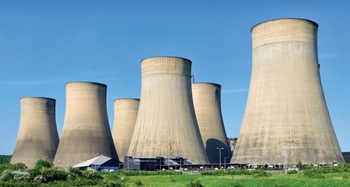
The heritage of nuclear and conventional power stations.