





Shop

Approved document B, Fire Safety, Volume 2, Buildings other than dwellinghouses (2019 edition), defines the purpose group 'shop and commercial' as:
Shops or premises used for either of the following:
- A retail trade or business (including selling food or drink to the public for immediate consumption, retail by auction, self-selection and over-the-counter wholesale trading, the business of lending books or periodicals for gain, the business of a barber or hairdresser, and the rental of storage space to the public).
- Premises to which the public are invited either:
- to deliver or collect goods in connection with their hire, repair or other treatment
- (except in the case of repair of motor vehicles) where the public themselves may carry out such repairs or other treatments.
The Town and Country Planning (Use Classes) Order, categorises uses of land and buildings in relation to the planning system.
Use class A1 ‘Shops’ is defined as:
Shops, retail warehouses, hairdressers, undertakers, travel and ticket agencies, post offices, pet shops, sandwich bars, showrooms, domestic hire shops, dry cleaners, funeral directors and internet cafes.
There is no equivalent 'commercial' use class.
The Scottish Building Standards, Part I. Technical Handbook – Domestic, Appendix A Defined Terms, defines a shop as: ‘…a building or premises used for retail or wholesale trade or business, including sales by auction, self-selection and over the counter wholesale trading, hairdressing and beauty or body care and premises to which members of the public are invited to resort for the purposes of delivering or uplifting goods in connection with cleaning, repair, hire or other treatment or (except in the case of the repair of motor vehicles) of themselves carrying out such cleaning, repair or other treatment.’
See also: Commercial premises definition.
NB In the construction industry, the term 'shop' might also be used to refer to workshops where products and components are manufactured, hence 'shop drawings'.
[edit] Related articles on Designing Buildings
Featured articles
Check out some of the best features and news from Designing Buildings as well as key stories from around the web.
Undervaluing our industrial past

Heritage value changes as taste for building styles changes.
Changing expectations around competence and compliance

New information sheet from CIAT.
Grenfell investigation files passed to CPS

Angela Rayner apologises on behalf of the British state.

Electrical contractors need to understand the practical implications.

The real barrier to getting more value from digital technology.

Your guide to The Construction Reset at UKCW Birmingham.

Accommodating the Victorian and Edwardian working woman. Book review.
Rethinking passive fire protection in design

PFP demands the same level of design rigour as structure or services.

38% of Gen Zs feel safe when a fire door is wedged open.
Stunning images from around the world

Shortlist for CIOB’s Art of Building photography competition.
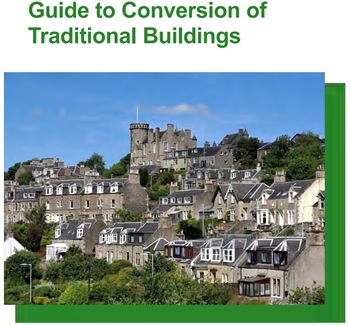
Guidance for conversion of traditional pre-1919 stone buildings.
Industrial heritage in the Ruhr
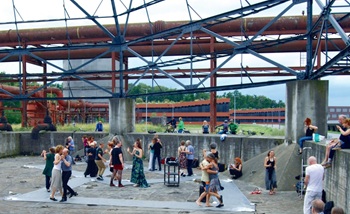
A marked difference to the fate of industrial landscapes in the UK.
Comments
[edit] To make a comment about this article, or to suggest changes, click 'Add a comment' above. Separate your comments from any existing comments by inserting a horizontal line.