






Pressurisation of Closed Heating and Cooling Systems (BG 82/2022)
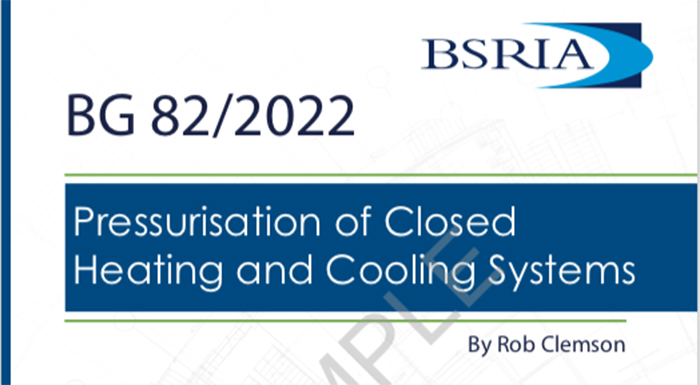
The maintenance of acceptable pressures whilst accommodating thermal expansion is one of the key factors in ensuring continuous and correct functioning of heating and cooling in buildings. Correct pressurisation prevents system failures, thus saving building owners time and cost related to system downtime and repairs.
Contents |
[edit] BSRIA launch
Pressurisation of Closed Heating and Cooling Systems (BG 82/2022)
This guide explains the principles of pressurisation, the different types of equipment used, and the calculation procedures following both British and European standards. The guide has been developed with a steering group of industry experts, following discussions on the importance of pressurisation, in the context of closed heating and cooling systems. Correct pressurisation prevents system failures, thus saving building owners time and cost related to system downtime and repairs.
[edit] Overview
In the context of closed heating and cooling systems, the term pressurisation covers:
- Maintaining system pressure within acceptable limits
- Accommodation of thermal expansion and contraction
- The application of safety devices
It may also include automatic top-up of system water and initial system filling.
[edit] Product details
Published: November 2022
Publisher: BSRIA
Author: Rob Clemson
ISBN: 978-0-86022-796-0
This article appears as "Pressurisation of Closed Heating and Cooling Systems (BG 82/2022)" on the BSRIA knowledge and bookshop website dated November 2022.
--BSRIA
[edit] Related articles on Designing Buildings
- Air handling unit.
- Active pressurisation.
- Boiler markets and the green recovery.
- Building heating systems.
- Building services.
- Cooling plant
- Corrosion in heating and cooling systems.
- Fan coil unit.
- Heat meter.
- Heat pump.
- Heating controls.
- HVAC.
- Radiant heating.
- Thermal comfort.
- Types of domestic heating system.
Featured articles
Check out some of the best features and news from Designing Buildings as well as key stories from around the web.

Electrical contractors need to understand the practical implications.

The real barrier to getting more value from digital technology.

Your guide to The Construction Reset at UKCW Birmingham.

Accommodating the Victorian and Edwardian working woman. Book review.
Rethinking passive fire protection in design

PFP demands the same level of design rigour as structure or services.

38% of Gen Zs feel safe when a fire door is wedged open.
Stunning images from around the world

Shortlist for CIOB’s Art of Building photography competition.

Guidance for conversion of traditional pre-1919 stone buildings.
Industrial heritage in the Ruhr

A marked difference to the fate of industrial landscapes in the UK.

Communities will be able to build their own clean energy.
Why diversity and inclusion matters for SMEs

CIOB’s D&I Charter shows how practical changes can support long-term growth.
Cut electricity bills to power growth

Coalition sends joint letter to the Chancellor.
Comments
[edit] To make a comment about this article, click 'Add a comment' above. Separate your comments from any existing comments by inserting a horizontal line.