





AutoCAD
To help develop this article, click 'Edit this article' above.
Autodesk's AutoCAD is one of the main Computer Aided Design (CAD) software tools used for technical drawing in the construction industry. It was first released in 1982 and is used to produce drawings for design, construction, maintenance and operation as well as for future work to the structure.
The UK nbs National BIM Survey 2013 suggested that the most popular CAD software amongst respondents was:
- Autodesk AutoCAD 26%
- Autodesk AutoCAD LT 19% (a lower cost version of AutoCAD, with reduced capabilities).
- Autodesk Revit 18% (used for Building Information Modelling).
- Nemetschek Vectorworks 13%
- Graphisoft ArchiCAD 7%
- Bentley Microstation 5%
- Trimble Sketchup 2%
- Bentley Building Suite 1%
- Nemetschek Allpan 0%
- Other 8%
AutoCAD drawings are created at 'full size' and can then be scaled to suit different paper sizes or other media. It is mainly used to produce 2D drawings, although there is also a 3D feature.
AutoCAD works by using a limited number of tools to draw straight lines, circles, arc's, and so on which are saved as a series of points or coordinates. This means that the resulting drawing files are relatively small in size.
As the drawing progresses other tools can be used to make the drawing more complex and contain more information. This full size drawing is drawn in model space mode which is virtually unlimited (in reality limited by the computer hardware specification), and then scaled down in the paper [space] mode.
The native file format for AutoCAD is .dwg, but files can also be produced in an interchange file format DXF.
Autodesk have a adopted an annual release strategy now popular for many software products as it allows a revenue stream for the programmers and ensures development of the software.
In AutoCAD 2010 it adopted the new visual style developed by Microsoft to allow use by all devices such as touchscreens, mouse, pens and digitizers.
[edit] Related articles on Designing Buildings Wiki
- Building information modelling.
- Computer aided design.
- Computer aided manufacturing.
- Computers in building design.
- Connected procurement.
- Document control.
- Information and communications technology.
- Interview with Kevin Borg, founder of KJB Building Consultants.
- Government Construction Strategy.
[edit] External references
Featured articles
Check out some of the best features and news from Designing Buildings as well as key stories from around the web.
Recognition, influence and growth

SocEnv identifies three strategic pillars in new strategy to 2045.
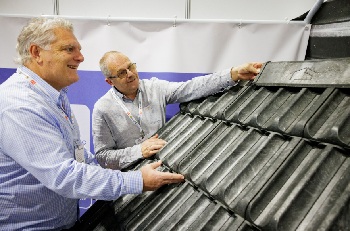
Discover the future of roofing, cladding and insulation.

New guidance for professional practice, cultural change and regulation in social housing.

The heritage of nuclear and conventional power stations.
New measures to stop people being ripped off

Government to protect families from cowboy builders and aggressive bailiffs.

New Futurebuild showcase brings an innovation-first approach.
National Planning Policy Framework
Understanding the 2026 changes.
ECA's public affairs priorities

Member consultation opens to shape priorities for 2027 to 2030.

Dutyholder responsibilities from 1 July 2026.
Where performance meets practice

The Building Envelope Stage at UKCW Birmingham.
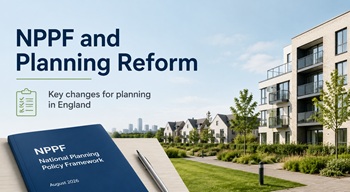
CIAT publishes briefing on planning reforms.
Leaders in Learning for Practice Network

Call for conservation leaders in learning to register interest in new network.
Comments