





Stairs riser
Part K of the building regulations requires that the rise, going, handrails, headroom, length and width of any stairs, ladders and ramps between levels are appropriate to afford reasonable safety to people gaining access to and moving about buildings.
Approved Document K - Protection from falling, collision and impact describes provisions that would satisfy this requirement. It defines the ‘rise’ of stairs as the height between consecutive treads, or for ramps, the vertical distance between each end of the ramp flight.

In a flight of steps, for all steps the measurements for rise and going should be as shown below.

All buildings should have level treads on steps, with the rise and going of each step consistent throughout a flight of steps. If stairs have more than 36 risers in consecutive flights there should be a minimum of one change of direction between flights.
Buildings other than dwellings should not have single steps. For flights between landings the maximum number of risers should be 16 risers for utility stairs and for general access stairs, 12 risers, but exceptionally no more than 16 in small premises where the plan area is restricted.
In buildings other than dwellings, risers should not be open, in order to avoid feet or walking aids being caught underneath the tread during ascent, possibly causing a fall or giving occupants a feeling of insecurity. In dwellings, steps may have open risers if treads overlap by a minimum of 16 mm and steps are constructed so that a 100 mm diameter sphere cannot pass through the open risers.
In buildings other than dwellings, step nosings should be made apparent using a visually contrasting material, a minimum of 55 mm wide, on both the tread and the riser. For common access areas in buildings that contain flats, risers should not be open and step nosings should be visually apparent, using a material that contrasts visually, 50 - 65 mm wide on the tread and 30 - 55 mm on the riser.
Where there are stepped gangways in assembly buildings, each step in the gangway should have a minimum height of 100 mm and a maximum height of 190 mm. If there are two or more rises to each row of seats, each step should be of an equal height.
See also: Stair rise.
[edit] Related articles on Designing Buildings
Featured articles and news
The future workforce: culture change and skill

Under the spotlight at UK Construction Week London.

A landmark moment for postmodern heritage.
A safe energy transition – ECA launches a new Charter

Practical policy actions to speed up low carbon adoption while maintaining installation safety and competency.
Frank Duffy: Researcher and Practitioner

Reflections on achievements and relevance to the wider research and practice communities.
The 2026 Compliance Landscape: Fire doors

Why 'Business as Usual' is a Liability.
Cutting construction carbon footprint by caring for soil

Is construction neglecting one of the planet’s most powerful carbon stores and one of our greatest natural climate allies.
ARCHITECTURE: How's it progressing?
Archiblogger posing questions of a historical and contextual nature.
The roofscape of Hampstead Garden Suburb
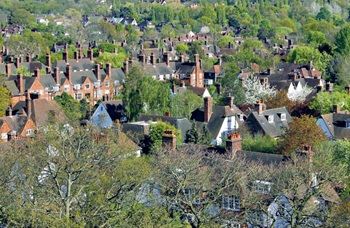
Residents, architects and roofers need to understand detailing.
Homes, landlords. tenants and the new housing standards

What will it all mean?
The Architectural Technology podcast: Where it's AT

Catch-up on the latest episodes.
Edmundson Apprentice of the Year award 2026

Entries now open for this Electrical Contractors' Association award.
Traditional blue-grey slate from one of the oldest and largest UK slate quarries down in Cornwall.
There are plenty of sources with the potential to be redeveloped.
Change of use legislation breaths new life into buildings

A run down on Class MA of the General Permitted Development Order.
Solar generation in the historic environment

Success requires understanding each site in detail.