





Limited combustibility
In England, the building regulations establish requirements for specific aspects of building design and construction. Approved documents then provide guidance for satisfying those requirements in common building situations.
Approved document B of the building regulations 'Fire Safety', defines limited combustibility as: 'A material performance specification that includes non-combustible materials, and for which the relevant test criteria are set out in Appendix A, paragraph 9.'
Requirements for materials of limited combustibility are defined in table A7 of Approved Document B.

Following the Grenfell Tower Fire, a decision was taken to ban combustible materials in the cladding for buildings over 18m in height. The following change to approved document 7 came into force on 21 December 2018.
| The Building Regulations restrict the use of combustible materials in the external walls of certain buildings over 18m in height. Refer to regulation 7(2) of the Building Regulations and to Approved Document B: volume 2, part B4 for details. |
[edit] Related articles on Designing Buildings Wiki
- ACM cladding.
- Approved document B.
- Approved inspector.
- BR 135 Fire Performance of external thermal insulation for walls of multi-storey buildings
- BS 8414 Fire performance of external cladding systems
- BS 9999.
- Building regulations.
- Combustibility.
- Fire and rescue service.
- Fire inspector.
- Fire safety design.
- Fire.
Featured articles
Check out some of the best features and news from Designing Buildings as well as key stories from around the web.

38% of Gen Zs feel safe when a fire door is wedged open.
Stunning images from around the world

Shortlist for CIOB’s Art of Building photography competition.

Guidance for conversion of traditional pre-1919 stone buildings.
Industrial heritage in the Ruhr

A marked difference to the fate of industrial landscapes in the UK.

Communities will be able to build their own clean energy.
Why diversity and inclusion matters for SMEs

CIOB’s D&I Charter shows how practical changes can support long-term growth.
Cut electricity bills to power growth

Coalition sends joint letter to the Chancellor.

Gasholders: a history in pictures. Book review.
Recognition, influence and growth

SocEnv identifies three strategic pillars in new strategy to 2045.
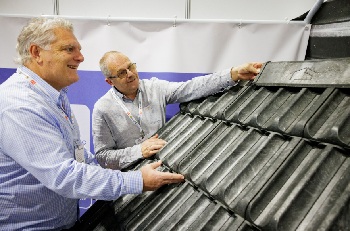
Discover the future of roofing, cladding and insulation.
New guidance for professional practice, cultural change and regulation in social housing.
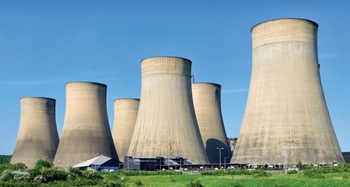
The heritage of nuclear and conventional power stations.