





Water table
The ‘water table’ is the below-ground level that marks the transition between ground that is saturated with water and ground that is not saturated. The upper, unsaturated level, is known as the 'capillary fringe' or 'zone of aeration'. The lower, saturated level, is known as the 'zone of saturation'. An aquifer is a pocket of water that is found below the water table.
As water moves down from the surface it filters through sediments and rocks and causes the water table to fluctuate. The water table typically follows the topography of the above-ground land, but sometimes intersects with the land surface, which may be evident from the presence of spring or oasis.
The level of the water table is influenced by:
- Geology: Heavy, dense rocks are capable of holding less water than light, porous rocks.
- Weather: which is why it tends to fluctuate seasonally.
- Vegetation.
- Snowmelt.
- Extraction: for industrial purposes, drinking water and so on.
- The way land is used: it is common for urban areas to have predominantly impervious surfaces such as roads, car parks and public spaces, and these prevent the seepage of water into the ground. Instead it becomes run off, and the water table can dip as a result.
The SuDS Manual (C753), published by CIRIA in 2015 defines the water table as: 'The point where the surface of groundwater can be detected. The water table may change with the seasons and with annual rainfall.'
[edit] Related articles on Designing Buildings
Featured articles
Check out some of the best features and news from Designing Buildings as well as key stories from around the web.
Bridging the gap between clients and contractors

Concerns remain around contractor quality, capability, and delivery.
Construction Management, 10 June.
Heat pumps beat boilers in new home tests.
Building Safety Act implementation in Wales

CIAT to host industry panel on 26 June.
New and updated CLC building safety guidance.
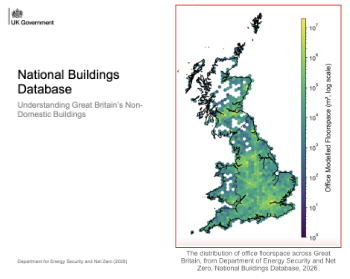
New UK National Buildings Database.
Building Safety Wiki Interviews

Chief executive of the British Woodworking Federation.
Planning condition discharge in England and Wales

A brief explanation from a building compliance expert, with further links.
Overheating guidance and tools for building designers

Guidance for dealing with element of building fabric control that have increasing importance.
Shading for housing, a design guide

From the Good Homes Alliance and British Blind and Shutter Association.
UK Standard Skills Classification (SSC)

A shared framework for describing skills needs.
Social media ban consultation comes to close

CIOB urges UK Government to consider social media’s role in careers guidance in ban debate.