





Stepped foundation
Foundations provide support for structures, transferring their load to layers of soil or rock that have sufficient bearing capacity and suitable settlement characteristics.
Strip foundations (or strip footings) are a type of shallow foundation used to provide a continuous, level (or sometimes stepped) strip of support to a linear structure such as a wall or closely-spaced rows of columns built centrally above them.

Where the natural surface of the ground is sloped, the most economical solution may be a stepped foundation. In this case, the foundation takes the form of a series of concrete horizontal steps following the slope of the ground.

This helps to minimise the amount of excavation and below-ground wall construction that would otherwise be required. Stepped foundations can also be used to transition from deep foundations to shallow foundations, and at corners and intersections.
Regularly stepping foundations also avoids abrupt and excessive changes in level that could cause a weakness resulting in movement. Similarly, abrupt and excessive changes in foundation depths should be avoided at corners and intersections by the introduction of stepping.
Each step in the foundation should be no higher than the thickness of the foundation. The foundation at the higher level should also overlap the lower foundation, typically by at least twice the height of the step, or by the thickness of the foundation, or by at least 300 mm (whichever is greatest).
Drainage must be carefully designed to eliminate the danger of instability due to accumulating water pressure.
[edit] Find out more
[edit] Related articles on Designing Buildings Wiki
Featured articles
Check out some of the best features and news from Designing Buildings as well as key stories from around the web.
Grenfell investigation files passed to CPS

Angela Rayner apologises on behalf of the British state.

Electrical contractors need to understand the practical implications.

The real barrier to getting more value from digital technology.

Your guide to The Construction Reset at UKCW Birmingham.

Accommodating the Victorian and Edwardian working woman. Book review.
Rethinking passive fire protection in design

PFP demands the same level of design rigour as structure or services.

38% of Gen Zs feel safe when a fire door is wedged open.
Stunning images from around the world

Shortlist for CIOB’s Art of Building photography competition.

Guidance for conversion of traditional pre-1919 stone buildings.
Industrial heritage in the Ruhr
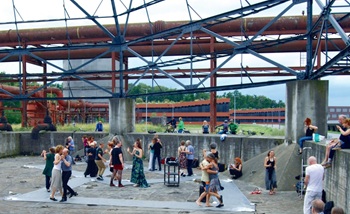
A marked difference to the fate of industrial landscapes in the UK.

Communities will be able to build their own clean energy.
Why diversity and inclusion matters for SMEs

CIOB’s D&I Charter shows how practical changes can support long-term growth.
Comments
What are the rebar design standards for stepped footing rebar?
are 90 degree hooks at step down acceptable?