





Floor definition
Approved document C, Site preparation and resistance to contaminants and moisture, suggests that a ‘floor’ can be defined as the: 'Lower horizontal surface of any space in a building including finishes that are laid as part of the permanent construction.'
A floor typically provides:
- Structural support for the contents of the room, its occupants, and the weight of the floor itself.
- Resistance to the passage of moisture, heat and sound.
- A surface finish which may contribute to the look, feel and acoustics of a space.
- Sometimes it may also form an integral part of the primary structure of the building.
- It may also include elements of building services, such as wiring, pipework, ducting, drainage, lighting, ventilation and so on.
The surface finish of a floor is generally referred to as flooring. For more information see: Flooring.
Types of floor include; floating floor, separating floor, sprung floor, raised floor, and so on. For more information, see Types of floor. For more information see: Types of floor.
[edit] Related articles on Designing Buildings
- Basement v cellar.
- Beam and block.
- Concrete floor.
- Cork flooring.
- Deck.
- Decking.
- Domestic floors: Part 1: Construction, insulation and damp proofing.
- Floating floor.
- Floor void.
- Flooring.
- Flooring defects.
- Glass bottle floor foundation.
- Plenum.
- Raised floor.
- Resilient flooring.
- Rubber flooring.
- Screed.
- Separating floor.
- Sprung floor.
- Storey.
- Types of floor.
Featured articles
Check out some of the best features and news from Designing Buildings as well as key stories from around the web.
Undervaluing our industrial past

Heritage value changes as taste for building styles changes.
Changing expectations around competence and compliance

New information sheet from CIAT.
Grenfell investigation files passed to CPS

Angela Rayner apologises on behalf of the British state.

Electrical contractors need to understand the practical implications.

The real barrier to getting more value from digital technology.

Your guide to The Construction Reset at UKCW Birmingham.

Accommodating the Victorian and Edwardian working woman. Book review.
Rethinking passive fire protection in design

PFP demands the same level of design rigour as structure or services.

38% of Gen Zs feel safe when a fire door is wedged open.
Stunning images from around the world

Shortlist for CIOB’s Art of Building photography competition.

Guidance for conversion of traditional pre-1919 stone buildings.
Industrial heritage in the Ruhr
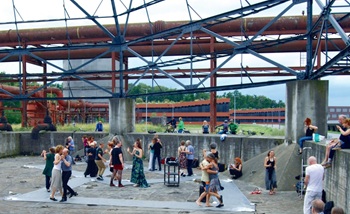
A marked difference to the fate of industrial landscapes in the UK.
Comments
[edit] To make a comment about this article, click 'Add a comment' above. Separate your comments from any existing comments by inserting a horizontal line.