




Strapwork
|
Wollaton Hall is an Elizabethan house outside Nottingham. It includes examples of strapwork both inside and out. |

The Penguin Dictionary of Architecture (third edition) was published in 1980. It was created for Penguin Reference and compiled by John Fleming, Hugh Honour and Nikolaus Pevsner.
It defines strapwork as: ‘Decoration originating in France (at the Royal Château de Fontainebleau) and the Netherlands c 1540, also common in Elizabethan England, consisting of interlaced bands and forms similar to fretwork or cut leather; generally used in ceilings, screens and funerary monuments.’
In England, strapwork was sometimes used in the 16th and 17th centuries as a type of decorative moulding around entrance doors.
Variations of strapwork include scrollwork (which was common during the Baroque era) and bandwork or interlaced bands (when there is no three dimensional aspect).
[edit] Related articles on Designing Buildings
Featured articles
Check out some of the best features and news from Designing Buildings as well as key stories from around the web.
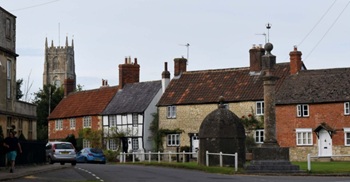
When buildings reflected the local resources available.

CIOB reports 57% are using artificial intelligence technologies.

More of England’s ‘hidden heroes’ will be celebrated.

CIAT calls for retrofit to be a priority.

Version 6 is now available, along with guidance for ECA members.

Post-War Homes: mid-century British architecture. Book review.

CIAT reflects on the party conferences.

CIOB announce the winners of the Art of Building photography competition.

National Scheme of Delegation introduced.

The cost of employing people remains a concern.
Code of Practice for Electrical Energy Storage Systems.

ECA calls on members to comment on draft 4th edition.
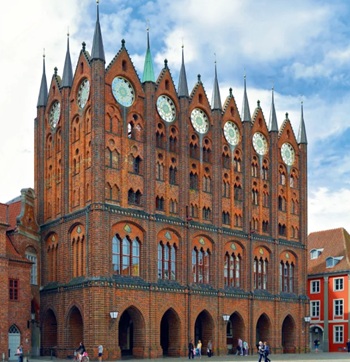
Bringing together expertise and creating cultural benefits.