





Quantity surveyor’s fees
Quantity surveyors (QS, sometimes referred to as cost consultants) provide expert advice on construction costs. They help to ensure that proposed projects are affordable and offer good value for money, helping the client and the design team assess and compare different options, and then track variations, ensuring that costs remain under control as the project progresses. Quantity surveyors can specialise in a specific aspect of construction costs, or in a particular type of construction.
On large projects, building contractors may have their own in-house quantity surveyors whose fees are included as part of the overall tender price. Smaller projects, may involve a private quantity surveyor (PQS), or a client may employ a quantity surveyor on larger projects to verify charges, provide advice on costs, help make appointments and so on.
Quantity surveyors are often employed on a percentage of the total contract cost. This can be around 0.5 to 2% but it will vary very significantly depending on the experience of the quantity surveyors, the type and complexity of project, the size of the project and the scope of services required.
Since the RICS abolished their indicative fee scales (the last one being withdrawn in 2000) there is very little benchmarking information freely available or guidance on appropriate fee levels. However, the Canadian Institute of Quantity Surveyors publish a fee schedule which ranges from 1.9% for a complex $1 million building to 0.2% for a simple $200 million + building. Ref http://www.ciqs.org/english/recommended-fee-schedule
Quantity surveyors can also be appointed on a time-charge basis, typically if just a small amount of work is required, if the work is urgent, or if the scope of the work is difficult to define. In this case, the services required and the likely amount of time should be agreed in detail, and perhaps a cap on the fee that can be charged without seeking further approval. Again, rates will vary very significantly depending on the experience of the quantity surveyor and the nature of the work required.
Sometimes a fixed fee may be negotiated, if for example, just a single report is required.
Fees should be negotiated with the quantity surveyor before starting work, and set out in writing. The Royal Institution of Chartered Surveyors (RICS) recommends that two or three chartered surveyors are approached for quotes before selecting one.
[edit] Related articles on Designing Buildings
Featured articles
Check out some of the best features and news from Designing Buildings as well as key stories from around the web.

Confronting competency, codes, capacity and costs.

The hidden risk in modern construction supply chains.
Construction Management, 10 June

24 months to 14: CITB launches accelerated apprenticeships.
Bridging the gap between clients and contractors

Concerns remain around contractor quality, capability, and delivery.
Construction Management, 10 June.

Heat pumps beat boilers in new home tests.
Building Safety Act implementation in Wales

CIAT to host industry panel on 26 June.

New and updated CLC building safety guidance.
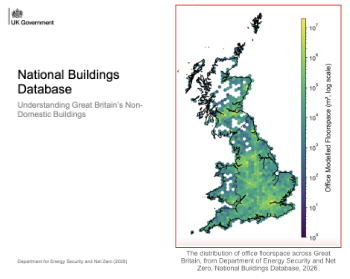
New UK National Buildings Database.
Building Safety Wiki Interviews

Chief executive of the British Woodworking Federation.
Planning condition discharge in England and Wales

A brief explanation from a building compliance expert, with further links.
Overheating guidance and tools for building designers

Guidance for dealing with element of building fabric control that have increasing importance.