




Propylaea
|
This illustration of the exterior propylaea of Eleusis (1862) comes from the Gazette Des Beaux-Arts, a French art review. |

The Penguin Dictionary of Architecture (third edition) was published in 1980. It was created for Penguin Reference and compiled by John Fleming, Hugh Honour and Nikolaus Pevsner.
It defines a propylaea (which is also referred to as propylea, propylaia or propylaeum) as “The entrance gateway to an enclosure (usually temple precincts) as on the Acropolis at Athens.”
In ancient Greek architecture, propylaea was typically constructed on a grand scale. The origins of the word (which can mean fore gate) indicates that the original term propylaea was not one gateway, but a series of gateways.
It is believed that there was a propylaea that opened into a large, colonnaded atrium in Old St Peter’s Basilica.
[edit] Related articles
Featured articles
Check out some of the best features and news from Designing Buildings as well as key stories from around the web.

Post-War Homes: mid-century British architecture. Book review.

CIAT reflects on the party conferences.

CIOB announce the winners of the Art of Building photography competition.

National Scheme of Delegation introduced.

The cost of employing people remains a concern.
Code of Practice for Electrical Energy Storage Systems.

ECA calls on members to comment on draft 4th edition.

Bringing together expertise and creating cultural benefits.

CIOB celebrates positive Ofsted report.

The Building Safety Regulator announces a call for evidence.

Government approach could undermine delivery and regeneration.
World's first mass timber data centre.
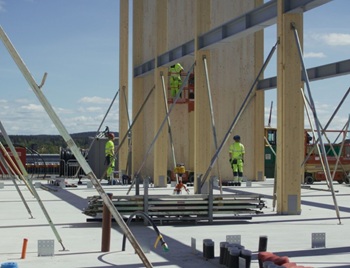
The overlooked environmental aspect of data centre development.
Introduction to radon awareness

New technical information sheet published by CIOB.