





Operational expenditure for built assets
Operational expenditure (opex, sometimes referred to as revenue expenditure) is expenditure incurred as a result of the day-to-day operations of a business. Operational expenditure might include expenditure such as; wages, utilities costs, maintenance and repairs, rent, sales, general and administrative expenses.
Operational expenditure is often distinguished form capital expenditure (capex), which is expenditure incurred in the acquisition, construction or enhancement of significant fixed assets including land, buildings and equipment that will be of use or benefit for more than one financial year.
Whilst it is generally relatively straight forward to identify expenditure to acquire or construct fixed assets, distinguishing between enhancements and operational expenditure such as repairs, maintenance, or replacement can be difficult. Very broadly, enhancements should either:
- Significantly lengthen the life of the asset
- Significantly increase the value of the asset.
- Significantly increase usefulness of the asset.
In construction, capex and opex can be considered to be associated with separate, distinct stages, with capital expenditure during acquisition and construction, and then a ‘handover’ to operational expenditure when the client takes possession of the completed development.
Capex and opex can be seen as competing needs, with higher capital expenditure often resulting in lower operational expenditure, as a higher quality asset may have lower maintenance and repair costs, lower utilities costs, and so on. Whilst sometimes the division between capital and operational expenditure can be one of necessity, based on the resources available to the client at the time, it can be based on an assessment of whole-life costs
Whole life costs consider all costs associated with the life of a building including:
- Acquisition.
- Fees
- Construction.
- Insurance, inflation and financing.
- Fixtures, fittings and equipment.
- Relocation.
- Operation.
- Disposal.
Whilst it is often tempting to seek savings in the early stages of a project, the relative benefit of this tends to be outweighed by the long-term impact.
This is sometimes demonstrated by a rough assessment of the typical costs of an office building over 30 years, in the ratio:
- 0.1 to 0.15 for design costs (ref OGC Achieving Excellence Guide 7 - Whole-Life costing).
- 1 for construction costs.
- 5 for maintenance and building operating costs during the lifetime of the building.
- 200 for the cost of operating the business during the lifetime of the building.
(Ref. Report of the Royal Academy of Engineering on The long term costs of owning and using buildings (1998).)
However, this has been criticised as misleading, not least because the construction industry accounts for around 7% of GDP, implying a much more significant proportion of business costs than the ratio suggests. Other ratios of construction costs to operational costs to business costs have suggested figures as low as 1:0.6:6 for some types of buildings. However, the usefulness of these ratios is questionable, other than if they are calculated based on actual figures for specific businesses.
[edit] Find out more
[edit] Related articles on Designing Buildings Wiki
Featured articles and news
Costs and insolvencies mount for SMEs, despite growth

Construction sector under insolvency and wage bill pressure in part linked to National Insurance, says report.
The place for vitrified clay pipes in modern infrastructure
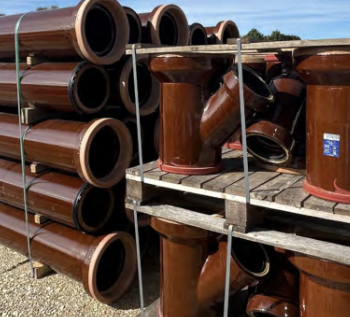
Why vitrified clay pipes are reclaiming their role in built projects.

Research by construction PR consultancy LMC published.
Roles and responsibilities of domestic clients
ACA Safety in Construction guide for domestic clients.
Fire door compliance in UK commercial buildings

Architect and manufacturer gives their low down.
Plumbing and heating for sustainability in new properties

Technical Engineer runs through changes in regulations, innovations in materials, and product systems.
Awareness of the Carbon Border Adjustment Mechanism
What CBAM is and what to do about it.
The new towns and strategic environmental assessments
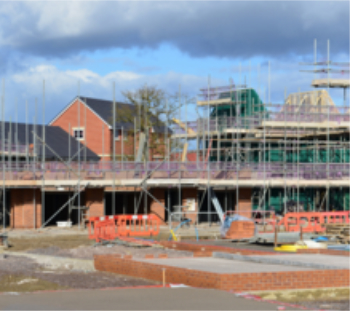
12 locations of the New Towns Taskforce reduced to 7 within the new towns draft programme and open consultation.
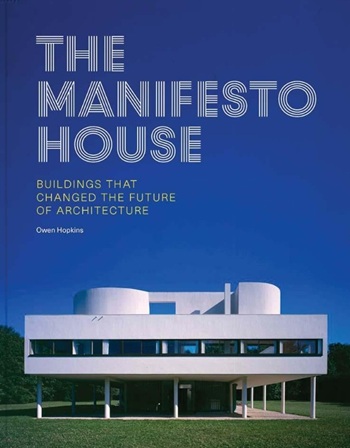
Buildings that changed the future of architecture. Book review.
The Sustainability Pathfinder© Handbook
Built environment agency launches free Pathfinder© tool to help businesses progress sustainability strategies.

Government outcome to the late payment consultation, ECA reacts.
IHBC 2025 Gus Astley Student Award winners

Work on the role of hewing in UK historic conservation a win for Jack Parker of Oxford Brookes University.
Future Homes Building Standards and plug-in solar
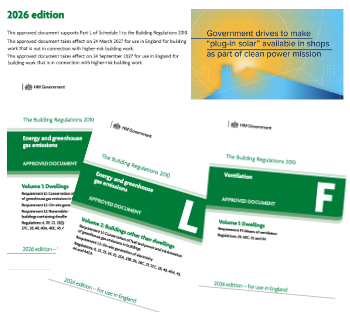
Parts F and L amendments, the availability of solar panels and industry responses.
How later living housing can help solve the housing crisis
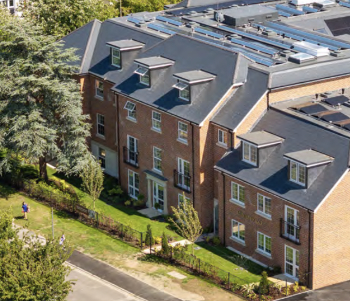
Unlocking homes, unlocking lives.
Preparing safety case reports for HRBs under the BSA
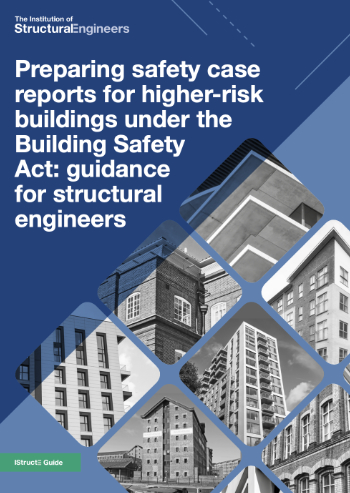
A new practical guide to preparing structural inputs for safety cases and safety case reports published by IStructE.
Male construction workers and prostate cancer

CIOB and Prostate Cancer UK encourage awareness of prostate cancer risks, and what to do about it.