





Land acquisition
Land acquisition is the process of buying a piece of land. The motivation behind land acquisition can be varied; perhaps as an alternative investment to shares, as the starting point for a self-build project, to develop at a later date, and so on.
As with other forms of acquisition, the caveat emptor rule applies which makes it incumbent on the buyer to undertake thorough research to identify any potential risks or problems.
The cost of a plot of land depends on factors such as; the desire of the vendor to sell, location, size, form, accessibility, proximity to infrastructure and transport links, the general state of the property market, whether it has or is likely to receive planning permission and so on. The term 'existing use value' refers to what land is worth in its current form, whereas 'hope value' refers to what it is worth based on the expectation of getting permission for development. Generally, land that has planning permission for development has a higher value than land that does not.
Land acquisition methods include:
- Through a consent-based obligation: A gift, settlement of a trust, contract agreement, and so on.
- Resulting or constructive trust: Acknowledges the contribution (financial or otherwise) that an individual has made to the land and/or property on it.
- Assurance: A claim of proprietary estoppel is a way for people to acquire rights in land if dealings with a landowner have fallen short of a contract.
- Adverse possession: A claim of a right in land if it has been inhabited long enough. If a person has been in possession of land for 12 years, they may be able to acquire legal title to it.
- Compulsory purchase: Making it available for public works such as building infrastructure, utilities or housing developments.
Options for finding land to acquire include:
- Advertising.
- Offering a finders fee.
- Online search tools and forums.
- Specialist land agent or estate agent.
- Approaching owners of land designated for residential use in local development plans.
- Analysing aerial photography and large-scale maps which might reveal potential infill plots, such as; large back gardens, waste ground or brownfield sites.
- Poorly built, low-value properties that might be worth purchasing for their land value.
- Local developers who may have individual plots for sale.
- Land auctions.
- Local authorities who may have parcels of land they are prepared to sell for development purposes.
- Utility companies may have surplus land that is for sale.
- Private enquiries to private homes, for example, which may have large gardens that the owners are willing to sell for development purposes.
A full and proper land survey should be carried out by a land surveyor prior to acquisition.
Feasibility studies can help determine the usability of the site and identify any potential issues that may be encountered.
A legal professional should be appointed to oversee land acquisition, although in general, purchasing land is less complicated than the buying and selling of property. Nevertheless, a lawyer specialising in land transactions will be able to ascertain issues relating to permissions, boundaries, rights of way, right to light, noise issues, and so on. They will also be responsible for checking that the land has clear title (i.e. that it is legitimately for sale), and that the legal documentation relating to the site is accurate and correct.
Information about the land in question can be obtained through the Land Registry.
[edit] Related articles on Designing Buildings Wiki
Featured articles
Check out some of the best features and news from Designing Buildings as well as key stories from around the web.
Bridging the gap between clients and contractors

Concerns remain around contractor quality, capability, and delivery.
Construction Management, 10 June.
Heat pumps beat boilers in new home tests.
Building Safety Act implementation in Wales

CIAT to host industry panel on 26 June.
New and updated CLC building safety guidance.
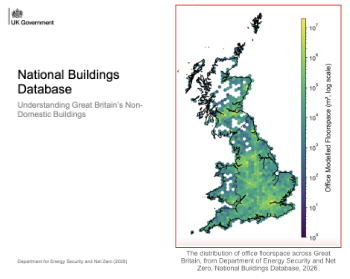
New UK National Buildings Database.
Building Safety Wiki Interviews

Chief executive of the British Woodworking Federation.
Planning condition discharge in England and Wales

A brief explanation from a building compliance expert, with further links.
Overheating guidance and tools for building designers

Guidance for dealing with element of building fabric control that have increasing importance.
Shading for housing, a design guide

From the Good Homes Alliance and British Blind and Shutter Association.
UK Standard Skills Classification (SSC)

A shared framework for describing skills needs.
Social media ban consultation comes to close

CIOB urges UK Government to consider social media’s role in careers guidance in ban debate.