




Hostel, House and Chambers: accommodating the Victorian and Edwardian working woman

Hostel, House and Chambers: accommodating the Victorian and Edwardian working woman, Emily Gee, Historic England/Liverpool University Press, 2025, 176 pages, hard back, 53 black-and-white and 16 colour illustrations.
You may have walked past the buildings celebrated by this book without knowing their original purpose. Gower Street and nearby Store Street in London are two fine examples, both built to house women who worked at Bourne and Hollingsworth’s store on Oxford Street. Warwickshire House on Gower Street housed 700 women in its two phases (1912 and 1936) and is now student accommodation. The book’s focus is on hostels like these, built for middle-class women in London between the mid-19th century and the second world war. Emily Gee’s study began as an Architectural Association thesis, expanded from previously published papers. Gee, a former head of listing at Historic England, has been director for cathedral and church buildings at the Church of England since 2023.
The urban lodging houses built for working-class women are not the subject of the book, but it covers the wider social history background. Gee explains that although wage levels dictated women’s choice of housing options, the campaign to build housing for ‘respectable’ women was partly driven by a desire to protect them from the evils of common lodging houses. Social reformers like Mary Higgs campaigned in a feminist context for housing that enabled a middle-class woman to live ‘a self-supporting life’. As cities grew in the 19th century, thousands of new jobs emerged in shops, offices, libraries, hospitals, schools and colleges, attracting an influx of single women.
The book provides some contextual chapters: on the campaign for municipal housing for working women; on men’s lodging houses in London; and on the international context (particularly New York and Boston, USA). It takes us through the development of hostels and housing for middleclass working women. The YWCA (Young Women’s Christian Association) originated in 1857, when the North London Home opened in a Fitzrovia townhouse ‘to house Florence Nightingale’s nurses on their way to and from the Crimea’. Rooms were subdivided into separate cubicles with shared facilities. For the next 30 years, Christian organisations converted houses using this model.
In 1888, Sloane Gardens House, the first purpose-designed women’s hostel was built, for Homes for Working Girls. Built in three phases, it housed 150 women, with communal dining and sitting rooms, a library and music rooms. By the early 1900s, this template had evolved into vast, architecturally imposing hostels such as Warwickshire House on Gower Street, with its ballroom and swimming pool. Alongside the architectural detail, Gee provides fascinating accounts of the women who lived there. The book mentions only a few examples of housing for middle-class women outside London, including in Manchester where the corporation built Ashton House in 1910.
The book ends with a section on conservation; many of the buildings have been successfully repurposed. Just eight are listed, but the book shows that many more are significant. It is well-produced and illustrated with contemporary plans and images, and there is a detailed bibliography and index.
This article originally appeared as ‘A self-supporting life’ in the Institute of Historic Building Conservation’s (IHBC’s) Context 186, published in December 2025. It was written by Marion Barter, historic buildings historian .
--Institute of Historic Building Conservation
Related articles on Designing Buildings Conservation.
IHBC NewsBlog
IHBC sponsors Gardens Trust event 23-4 Sept 2026
.jpeg)
'Learning from the Past, Shaping the Future’ takes place in Milton Keynes
Renovations to Frank Lloyd Wright's Fallingwater complete
.jpg)
World Heritage Preserved project opens house for tours again
Shakespeare Birthplace Trust places Hall's Croft on HAR Register
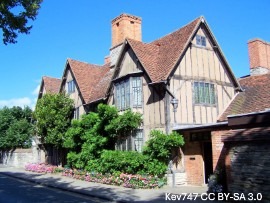
Stratford-upon-Avon home of Shakespeare's daughter is 'At Risk'
Lady Grange’s House repaired on St Kilda
.jpg)
National Trust for Scotland repairs stone cleit with link to famous island resident
Griff Rhys Jones on BBC Radio 4 Today programme
,_Green_Lane,_Derby.jpg)
The Victorian Society’s President unveiled its latest Top Ten Endangered Buildings 2026.
Need a MATE? Book your place now.
IHBC offers free webinars on applying for IHBC accreditation (Full & Associate).
UK Stained Glass Repository finds windows new homes
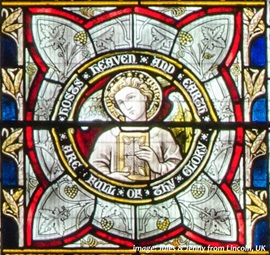
How are stained glass windows are rescued, stored and repurposed?
APPGEBE report sets high aims for quality
'Government must not sacrifice quality in drive to build 1.5m homes'
New measures protect Historic Shipwrecks from heritage crime

Underwater cultural heritage benefits from new HE guidance
How could the City of London skyline look in 6 years' time?

Visualisation shows approved planning applications as completed buildings
National Trust for Scotland calls for VAT cuts
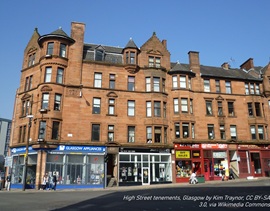
Heritage neglect is encouraged by current policies
IHBC's 'Context' Issue 186 features Industrial Heritage
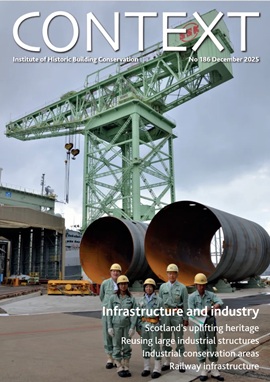
IHBC's members' journal reports on the challenges of conserving infrastructure
Book now for IHBC Annual School 2026
IHBC Annual School is taking place 18-20 June 2026 in Newcastle
RICHeS Research Infrastructure offers ‘Full Access Fund Call’
RICHeS offers a ‘Help’ webinar on 11 March
Latest IHBC Issue of Context features Roofing
Articles range from slate to pitched roofs, and carbon impact to solar generation to roofscapes
Three reasons not to demolish Edinburgh’s Argyle House

Should 'Edinburgh's ugliest building' be saved?
IHBC’s 2025 Parliamentary Briefing...from Crafts in Crisis to Rubbish Retrofit
IHBC launches research-led ‘5 Commitments to Help Heritage Skills in Conservation’
How RDSAP 10.2 impacts EPC assessments in traditional buildings

Energy performance certificates (EPCs) tell us how energy efficient our buildings are, but the way these certificates are generated has changed.