





Golden rules
The National Planning Policy Framework (NPPF), published by the Ministry of Housing, Communities and Local Government in December 2024, states:
156 Where major development involving the provision of housing is proposed on land released from the Green Belt through plan preparation or review58, or on sites in the Green Belt subject to a planning application59, the following contributions (‘Golden Rules’) should be made:
- a) affordable housing which reflects either: (i) development plan policies produced in accordance with paragraphs 67-68 of this Framework; or (ii) until such policies are in place, the policy set out in paragraph 157 below;
- b) necessary improvements to local or national infrastructure; and
- c) the provision of new, or improvements to existing, green spaces that are accessible to the public. New residents should be able to access good quality green spaces within a short walk of their home, whether through onsite provision or through access to offsite spaces.
157 Before development plan policies for affordable housing are updated in line with paragraphs 67-68 of this Framework, the affordable housing contribution required to satisfy the Golden Rules is 15 percentage points above the highest existing affordable housing requirement which would otherwise apply to the development, subject to a cap of 50%60. In the absence of a pre-existing requirement for affordable housing, a 50% affordable housing contribution should apply by default. The use of site-specific viability assessment for land within or released from the Green Belt should be subject to the approach set out in national planning practice guidance on viability.
158 A development which complies with the Golden Rules should be given significant weight in favour of the grant of permission.
159 The improvements to green spaces required as part of the Golden Rules should contribute positively to the landscape setting of the development, support nature recovery and meet local standards for green space provision where these exist in the development plan. Where no locally specific standards exist, development proposals should meet national standards relevant to the development (these include Natural England standards on accessible green space and urban greening factor and Green Flag criteria). Where land has been identified as having particular potential for habitat creation or nature recovery within Local Nature Recovery Strategies, proposals should contribute towards these outcomes.
Ref https://www.gov.uk/government/news/planning-overhaul-to-reach-15-million-new-homes
See also:
[edit] Related articles on Designing Buildings
Featured articles
Check out some of the best features and news from Designing Buildings as well as key stories from around the web.
Building Safety Act implementation in Wales

CIAT to host industry panel on 26 June.
New and updated CLC building safety guidance.
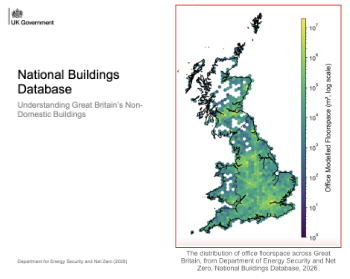
New UK National Buildings Database.
Building Safety Wiki Interviews

Chief executive of the British Woodworking Federation.
Planning condition discharge in England and Wales

A brief explanation from a building compliance expert, with further links.
Overheating guidance and tools for building designers

Guidance for dealing with element of building fabric control that have increasing importance.
Shading for housing, a design guide

From the Good Homes Alliance and British Blind and Shutter Association.
UK Standard Skills Classification (SSC)

A shared framework for describing skills needs.
Social media ban consultation comes to close

CIOB urges UK Government to consider social media’s role in careers guidance in ban debate.
The latest of eight Skills England apprenticeship units

The addition of battery manufacturing welcomed by ECA with a warning about the risks of fast-tracked apprenticeship units.
Building Control Independent Panel final report
A precis of a key report led by Dame Hackitt with full recommendations and link to the government response.