





Ex gratia
Insurance Policyholder Taxation Manual, published by HM Revenue & Customs on 19 March 2016, defines ex gratia as: ‘without legal obligation.’
An ex gratia payment is a payment made by one party to another without the payer acknowledging any legal obligation to do so. This type of payment is typically made voluntarily and as a gesture of goodwill or to maintain good relations, rather than as a result of a contractual requirement or legal liability. Ex gratia payments are often made to address a dispute or issue without admitting fault or liability. They may also preserve a business relationship, smooth over a disagreement, or assist a party facing financial difficulty, without setting a legal precedent.
In practice, an ex gratia payment might be made in situations such as:
- Compensating a contractor for delays caused by unforeseeable events, even though the contract does not require such compensation.
- Providing financial assistance to a subcontractor struggling to meet deadlines due to cash flow issues, without the main contractor admitting any fault.
- Settling a potential claim for defects or damages without the paying party admitting that the defects or damages were their responsibility.
The payer does not accept any legal responsibility or obligation by making the payment. It is explicitly understood that the payment is made without any admission of liability. Even though the payment is voluntary, it is typically documented to ensure clarity and avoid misunderstandings. This can include a written statement confirming that the payment is ex gratia and does not constitute an admission of liability.
Ex gratia payments are often more cost-effective and less adversarial than more formal proceedings.
[edit] Related articles on Designing Buildings
Featured articles
Check out some of the best features and news from Designing Buildings as well as key stories from around the web.
Bridging the gap between clients and contractors

Concerns remain around contractor quality, capability, and delivery.
Construction Management, 10 June.
Heat pumps beat boilers in new home tests.
Building Safety Act implementation in Wales

CIAT to host industry panel on 26 June.
New and updated CLC building safety guidance.
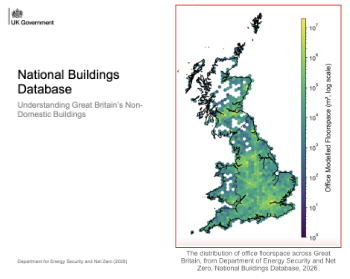
New UK National Buildings Database.
Building Safety Wiki Interviews

Chief executive of the British Woodworking Federation.
Planning condition discharge in England and Wales

A brief explanation from a building compliance expert, with further links.
Overheating guidance and tools for building designers

Guidance for dealing with element of building fabric control that have increasing importance.
Shading for housing, a design guide

From the Good Homes Alliance and British Blind and Shutter Association.
UK Standard Skills Classification (SSC)

A shared framework for describing skills needs.
Social media ban consultation comes to close

CIOB urges UK Government to consider social media’s role in careers guidance in ban debate.