





Erich Mendelsohn
Erich Mendelsohn (March 21, 1887 – September 15, 1953) was a German architect, known for his expressionist designs in the 1920s and for developing a dynamic functionalism in his projects for department stores and cinemas. Born in Allenstein (Olsztyn), East Prussia, Mendelsohn was the fifth of six children; his mother was a hatmaker and his father a shopkeeper. He attended a humanist Gymnasium in Allenstein and continued with commercial training in Berlin.
In 1906 he took up the study of national economics at the University of Munich. In 1908 he began studying architecture at the Technical University of Berlin; two years later he transferred to the Technical University of Munich, where in 1912 he graduated cum laude. In Munich he was influenced by Theodor Fischer, an architect whose own work fell between neo-classical and Jugendstil, and who had been teaching there since 1907. Mendelsohn also made contact with members of Der Blaue Reiter and Die Brücke, two groups of expressionist artists.
From 1912 to 1914 he worked as an independent architect in Munich. In 1915 he married cellist Luise Maas. Through her, he met the cello-playing astrophysicist Erwin Finlay Freundlich. Freundlich was the brother of Herbert Freundlich, the deputy director of the Kaiser Wilhelm Institut für Physikalische Chemie und Elektrochemie (now the Fritz Haber Institute of the Max Planck Society) in the Dahlem district of Berlin. Freundlich wished to build an astronomical observatory suitable for experimentally confirming Einstein's Theory of Relativity. Through his relationship with Freundlich, Mendelsohn had the opportunity to design and build the Einsteinturm (Einstein Tower). This relationship and also the family friendship with the Luckenwalde hat manufacturers Salomon and Gustav Herrmann helped Mendelsohn to an early success. From then until 1918, what is known of Mendelsohn is, above all, a multiplicity of sketches of factories and other large buildings, often small format or in letters from the front to his wife.
At the end of 1918, upon his return from World War I, he settled his practice in Berlin. As early as 1924 Wasmuths Monatshefte für Baukunst (a series of monthly magazines on architecture) produced a booklet about his work. In that same year, along with Ludwig Mies van der Rohe and Walter Gropius he was one of the founders of the progressive architectural group known as Der Ring.
His practice grew. In its best years, it employed as many as forty people, among them, as a trainee, Julius Posener, later a famous architectural historian. Mendelsohn's work encapsulated the consumerism of the Weimar Republic, particularly in his shops: most famously the Schocken Department Stores. He was also interested in the socialist experiments being made in the USSR, where he designed the red Flag Textile Factory in 1926 (together with the senior architect of this project, Hyppolit Pretreaus). His Mossehaus newspaper offices and Universum cinema were also highly influential on art deco and Streamline Moderne.
During this time, Mendelsohn was successful both in his work and financially. In 1926, not even forty years old, he was able to buy himself an old villa. In 1928 planning began for his Rupenhorn house, nearly 4000 m², which the family occupied two years later. With an expensive publication about his generously proportioned new home, adorned with the work of Amédée Ozenfant among others, Mendelsohn became the subject of envy.
As a Jew, seeing the rise of antisemitic tendencies in Germany, he emigrated in the spring of 1933 to England. His not inconsiderable fortune was later seized by the Nazis, his name was struck from the list of the German Architects' Union, and he was excluded from the Prussian Academy of Arts.
In England he began a business partnership with Serge Chermayeff, which continued until the end of 1936. Mendelsohn had long known Chaim Weizmann, later President of Israel. At the start of 1934 he began planning a series of projects on Weizmann's behalf in Mandatoric Israel under British rule and in 1935 opened a bureau in Jerusalem, where he influenced the local Jerusalem International Style, all facades fashioned in limestone. In 1938, having already dissolved his London office, he took UK citizenship and shortening his English forename to "Eric".
From 1941 until his death Mendelsohn lived in the United States and taught at the University of California, Berkeley. Until the end of World War II his activities were limited by his immigration status to lectures and publications. He also served as an advisor to the U.S. government. In 1943 he collaborated with the U.S. Army and Standard Oil to build "German Village", a set of replicas of typical German working class housing estates, which would be of key importance in acquiring the know-how and experience necessary to carry out the firebombings on Berlin. In 1945 he established himself in San Francisco. From then until his death in 1953 he undertook various projects, mostly for Jewish communities.
[edit] Related articles on Designing Buildings Wiki
Featured articles and news
The sad story of Derby Hippodrome
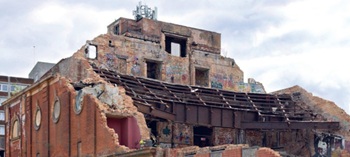
An historic building left to decay.

ECA, JIB and JTL back Fabian Society call to invest in skills for a stronger built environment workforce.
Women's Contributions to the Built Environment.
Calls for the delayed Circular Economy Strategy
Over 50 leading businesses, trade associations and professional bodies, including CIAT, and UKGBC sign open letter.
The future workforce: culture change and skill

Under the spotlight at UK Construction Week London.
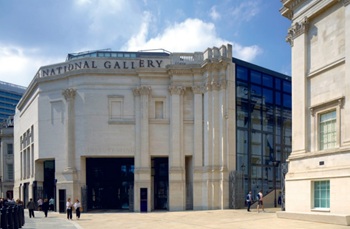
A landmark moment for postmodern heritage.
A safe energy transition – ECA launches a new Charter

Practical policy actions to speed up low carbon adoption while maintaining installation safety and competency.
Frank Duffy: Researcher and Practitioner
Reflections on achievements and relevance to the wider research and practice communities.
The 2026 Compliance Landscape: Fire doors

Why 'Business as Usual' is a Liability.
Cutting construction carbon footprint by caring for soil

Is construction neglecting one of the planet’s most powerful carbon stores and one of our greatest natural climate allies.
ARCHITECTURE: How's it progressing?
Archiblogger posing questions of a historical and contextual nature.
The roofscape of Hampstead Garden Suburb
Residents, architects and roofers need to understand detailing.
Homes, landlords. tenants and the new housing standards

What will it all mean?