





Earned value for construction contracts

|
Earned value analysis (EVA), also known as earned value management (EVM), is a technique used to assess project progress by comparing the amount and cost of work that was planned to have been done by a particular stage with the amount that has actually been done and what it has actually cost.
This gives a good indication of how the project is progressing compared to what was planned and enables forecasts to be made about the eventual cost and time that will be required to complete the project.
Typically, EVA is carried out for each of the packages that make up the project. Actual outputs are measured against planned outputs (often on a weekly basis) using the units that individual companies use to price and measure work.
This provides an opportunity to investigate discrepancies and take remedial action where necessary. It also provides a fairly accurate insight into the financial wellbeing of package contractors and provides early warning of a shortage of resources or of an inefficient use of resources.
The key is to measure actual resource against planned resource using the production units by which estimates have been produced in order to price a tender. This can be:
- Hours worked per week.
- Number of workers per week.
- Volume of say, concrete per week per person.
- Units fixed per week per person.
These items can be plotted weekly to alert the user to trends and allow them to investigate causes. Furthermore, it provides an overall general picture of labour productivity for each monitored operation.
Carrying out this sort of analysis requires that project planning is broken down into packages and that tender documentation is drafted to require contractors to supply the information required.
[edit] Related articles on Designing Buildings Wiki
- Benchmarking.
- Contractor.
- Cost monitoring.
- Cost performance index (CPI).
- Identifying the causes of trends in construction labour productivity.
- Key performance indicators.
- Programme consultant.
- Progress of construction works.
- Schedule performance index (SPI).
- Sub-contractor.
- Tender.
- Tender documentation.
[edit] External references
Featured articles
Check out some of the best features and news from Designing Buildings as well as key stories from around the web.
Bridging the gap between clients and contractors

Concerns remain around contractor quality, capability, and delivery.
Construction Management, 10 June.

Heat pumps beat boilers in new home tests.
Building Safety Act implementation in Wales

CIAT to host industry panel on 26 June.

New and updated CLC building safety guidance.
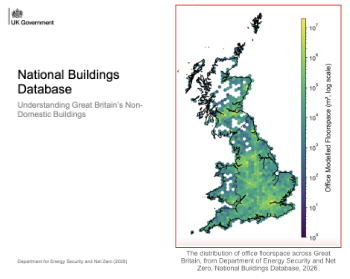
New UK National Buildings Database.
Building Safety Wiki Interviews

Chief executive of the British Woodworking Federation.
Planning condition discharge in England and Wales

A brief explanation from a building compliance expert, with further links.
Overheating guidance and tools for building designers

Guidance for dealing with element of building fabric control that have increasing importance.
Shading for housing, a design guide

From the Good Homes Alliance and British Blind and Shutter Association.
UK Standard Skills Classification (SSC)

A shared framework for describing skills needs.
Social media ban consultation comes to close

CIOB urges UK Government to consider social media’s role in careers guidance in ban debate.