





Document control in building design and construction
An understanding of where documents are, who created them, what they are for and how to retrieve them is extremely important in order to avoid confusion and mistakes.
Organisations may have their own internal quality management system or ISO 9001 certification that sets out their document control procedures, but on a building design project, the consultant team members and the client may wish to agree a common system of document control.
Automatic, electronic systems for document control can be used (document management systems (DMS)) that will automatically name, create versions, track, archive, retrieve and share documents, however at the very least a document control system should be agreed that standardises:
- Document naming.
- Numbering.
- Revision numbering.
- Checking and approval systems.
- Status of documents, such as 'for construction', or 'for information'.
- How changes are recorded and highlighted.
- Templates, such as document titles and drawing title blocks.
- Formatting (page sizes and orientation, fonts and font sizes etc).
- Systems for storing and issuing documents (distribution matrix).
- Control of externally created documents.
It is important that the whole project team buys into and supports the document control system as such systems can only be effective if they include all documentation, and there can be a tendency for members of the project team to allow systems to slip if they see that others are not following agreed procedures. See collaborative practices.
Increasingly, project teams are establishing online environments for file sharing and / or document control (such as a common data environment). It is important that it is clear who is responsible for maintaining such a system, and whether it is a contractual requirement for members of the project team to use it.
Guidance on the standardisation and control of drawings can be found in the article on computer aided design (CAD).
NB: The ARB (Architects Registration Board) Code: 'Standards of professional conduct and practice', requires that architects have adequate quality management systems in place to protect a client's interest. Standard 4: 'Competent management of your business' states: 'you should ensure that adequate security is in place to safeguard both paper and electronic records for your client, taking full account of data protection legislation, and that clients' confidential information is safeguarded'
See also: General Data Protection Regulations (GDPR).
[edit] Related articles on Designing Buildings
- BS11000.
- Building information modelling.
- Change control.
- Change control: a quality perspective.
- Common data environment.
- General Data Protection Regulations (GDPR).
- Global Unique IDs (GUIDs).
- Information manager.
- Knowledge management.
- Variation.
[edit] External references
Featured articles
Check out some of the best features and news from Designing Buildings as well as key stories from around the web.

Your views needed - a strategy for the professions, trades and occupations.

Confronting competency, codes, capacity and costs.
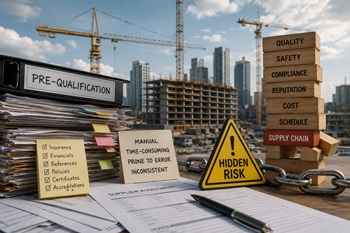
The hidden risk in modern construction supply chains.
Construction Management, 10 June

24 months to 14: CITB launches accelerated apprenticeships.
Bridging the gap between clients and contractors

Concerns remain around contractor quality, capability, and delivery.
Construction Management, 10 June.
Heat pumps beat boilers in new home tests.
Building Safety Act implementation in Wales

CIAT to host industry panel on 26 June.
New and updated CLC building safety guidance.
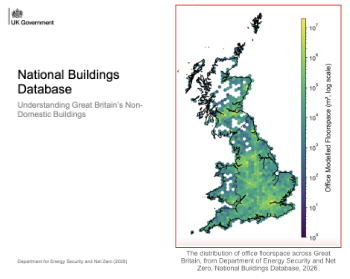
New UK National Buildings Database.
Building Safety Wiki Interviews

Chief executive of the British Woodworking Federation.
Planning condition discharge in England and Wales

A brief explanation from a building compliance expert, with further links.
Comments
Excellent information. I also wrote an article covering document control