





Coordination in the construction industry
Coordination (or co-ordination) refers to the process of organising people, systems, activities and so on so that they work together. Coordination is generally considered to improve efficiency and effectiveness, whilst fragmentation can cause inefficiencies and even clashes.
Coordination is a particular issue in the construction industry, where teams of people may come together to work on a complex design and construction involving many interrelated elements, and when the project is finished, they may disperse and might not work together again. Ensuring that this team works effectively together requires careful coordination, integration and collaboration – not something that the industry is always successful at achieving.
For more information see: Fragmentation
In the construction industry, co-ordination often refers to design coordination, that is, the integration of designs prepared by different members of the project team to create a single, unified set of information that can be constructed without clashes between components. Effective design coordination can help to reduce costs, delays and disruption that can be caused by problems on site and the need for remedial or abortive works and redesign.
For more information see: Design coordination.
Coordination in the construction industry may also refer to:
- BIM model coordination.
- Spatial coordination.
- Supply chain coordination.
- Coordination of documentation or policies.
- Coordination of construction activities.
- Coordination between bodies, such as government departments.
- Collaborative practices between project team members.
- Integration of systems, such as transport systems.
NB Roles in construction projects: analysis and terminology, by Hughes, W. and Murdoch, J. R, published in 2001 by the University of Reading, defines co-ordinate as: ‘Ensuring that information flows successfully between organizational links and assembling diverse outputs.’
[edit] Related articles on Designing Buildings
- BIM co-ordinator.
- Building information modelling.
- CDM coordinator.
- Clash avoidance.
- Collaborative practices.
- Design.
- Design coordination.
- Design coordinator.
- Design management.
- Fragmentation.
- Information manager.
- Integrated design.
- Lead designer.
- Modular co-ordination.
- Retrofit coordinator.
- Tolerances.
Featured articles
Check out some of the best features and news from Designing Buildings as well as key stories from around the web.
Bridging the gap between clients and contractors

Concerns remain around contractor quality, capability, and delivery.
Construction Management, 10 June.

Heat pumps beat boilers in new home tests.
Building Safety Act implementation in Wales

CIAT to host industry panel on 26 June.
New and updated CLC building safety guidance.
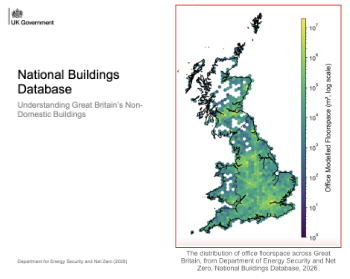
New UK National Buildings Database.
Building Safety Wiki Interviews

Chief executive of the British Woodworking Federation.
Planning condition discharge in England and Wales

A brief explanation from a building compliance expert, with further links.
Overheating guidance and tools for building designers

Guidance for dealing with element of building fabric control that have increasing importance.
Shading for housing, a design guide

From the Good Homes Alliance and British Blind and Shutter Association.
UK Standard Skills Classification (SSC)

A shared framework for describing skills needs.
Social media ban consultation comes to close

CIOB urges UK Government to consider social media’s role in careers guidance in ban debate.