





Construction contract register
Contract registers provide schedules of contracts that have been let. They might be prepared for a specific project or by a large contracting organisation such as a local authority who may have a large number of live contracts at any time. Where the situation is very complex, there may be a number of sub-registers, for different projects, departments or locations.
Contract registers provide an invaluable record, helping track contract status and can be used by public organisations to provide transparency.
A main contractor may establish a contract register during the mobilisation stage of a project. This can be provide crucial information, not just for tracking contracts, but if for example the main contractor becomes insolvent.
A contract register might include information such as:
- An identification number for the contract.
- The purpose of the contract.
- Location of the works.
- Who the contract is with (this is not always as clear as might be hoped – see for example Derek Hodd Limited v Climate Change Capital Limited)
- Who signed the contract and when.
- Where the original executed contract can be found.
- Who is responsible for the contract.
- The status of the contract.
- Payments made.
- Retention.
- The start date.
- The completion date.
- Details of any extensions of time or changes to the contract sum.
Contract registers will generally be prepared digitally, and may be configured so that information is imported from or exported to other databases or software or so that reports can be generated automatically. Consideration may need to be given to security issues and confidentiality of information in relation to some contracts.
Contract management software may be used for recording contract details and tracking progress, providing contract managers with up-to-date information and enabling them to make better decisions.
[edit] Related articles on Designing Buildings
Featured articles and news
Homes, landlords. tenants and the new housing standards

What will it all mean?
The Architectural Technology podcast: Where it's AT

Catch-up on the latest episodes.
Edmundson Apprentice of the Year award 2026

Entries now open for this Electrical Contractors' Association award.

Traditional blue-grey slate from one of the oldest and largest UK slate quarries down in Cornwall.

There are plenty of sources with the potential to be redeveloped.
Change of use legislation breaths new life into buildings

A run down on Class MA of the General Permitted Development Order.
Solar generation in the historic environment

Success requires understanding each site in detail.
Level 6 Design, Construction and Management BSc

CIOB launches first-ever degree programme to develop the next generation of construction leaders.

Open for business as of April, with its 2026 prospectus and new pipeline of housing schemes.
The operational value of workforce health

Keeping projects moving. Incorporating unplanned absence and the importance of health, in operations.
A carbon case for indigenous slate

UK slate can offer clear embodied carbon advantages.
Costs and insolvencies mount for SMEs, despite growth

Construction sector under insolvency and wage bill pressure in part linked to National Insurance, says report.
The place for vitrified clay pipes in modern infrastructure
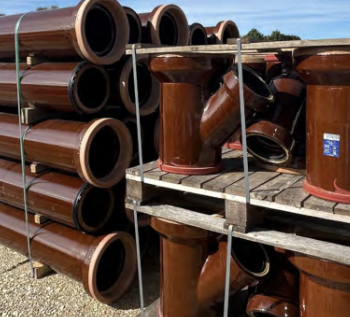
Why vitrified clay pipes are reclaiming their role in built projects.

Research by construction PR consultancy LMC published.
Roles and responsibilities of domestic clients

ACA Safety in Construction guide for domestic clients.
Fire door compliance in UK commercial buildings

Architect and manufacturer gives their low down.