





Concrete joint
Containment systems for the prevention of pollution, Secondary, tertiary and other measures for industrial and commercial premises (CIRIA C736), published by CIRIA in 2014, suggests that construction joints (in concrete, sometimes referred to as daywork joints) refer to: ‘A joint in concrete construction formed when placement of the concrete is interrupted for some reason. It may be the end of the day’s work, or it may be that some other work needs to be completed before resuming the placement. Results in a ‘surface’ between freshly placed and (partly) cured concrete.’
Crack control joints are: ‘A partially-formed contraction joint, which aims to ensure that when the concrete does crack, it cracks in a predictable manner at a precise location.
Contraction or shrinkage joints (in concrete): ‘Allows only for contraction or shrinkage of a slab or wall, as can be anticipated during the curing process.’
Expansion joints (in concrete): ‘Allow expansion and contraction of a concrete slab or wall without generating potentially damaging forces within the slab itself or the surrounding structures. Expansion joints are usually a complete ‘gap’ between adjacent bays, ie there is a definite break in the concrete and reinforcing steel that may be present. Where adjacent bays are ‘tied’ together by means of dowel bars, these dowels are sleeved in one of the bays to allow expansion to take place without generating stresses within the slab.’
A kicker joint is a: ‘Small upstand cast as part of a concrete base to allow the securing of wall shutters.'
[edit] Related articles on Designing Buildings Wiki
Featured articles
Check out some of the best features and news from Designing Buildings as well as key stories from around the web.
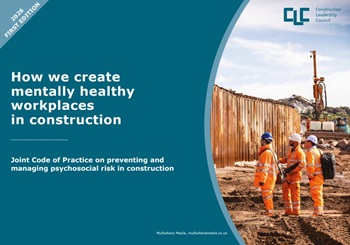
CLC publishes Mental Health Joint Code of Practice.

A quick introduction to its uses and risks.
Construction Management, 17 June

Government rolls out digital planning tool to all local authorities.

Your views needed - a strategy for the professions, trades and occupations.

Confronting competency, codes, capacity and costs.

The hidden risk in modern construction supply chains.
Construction Management, 10 June

24 months to 14: CITB launches accelerated apprenticeships.
Bridging the gap between clients and contractors

Concerns remain around contractor quality, capability, and delivery.
Construction Management, 10 June.

Heat pumps beat boilers in new home tests.
Building Safety Act implementation in Wales

CIAT to host industry panel on 26 June.
New and updated CLC building safety guidance.