





7 essential tips to understand the basics of mechanical engineering
[edit] Mechanical engineering
Mechanical engineering is a diverse and exciting field that encompasses the design, analysis, and manufacturing of mechanical systems. If you're pursuing a Mechanical Engineering Assignment Help or simply looking to deepen your understanding of the subject, this blog post provides seven essential tips to help you grasp the basics of mechanical engineering.
[edit] Master the fundamental concepts
To excel in mechanical engineering, it's crucial to have a strong grasp of fundamental concepts. These include topics such as Newton's laws of motion, thermodynamics, materials science, and mechanics. Spend ample time studying these foundational principles, as they form the building blocks for more advanced concepts in the field.
[edit] Develop solid mathematical skills
Mechanical engineering heavily relies on mathematical modelling and analysis. To effectively solve engineering problems, it's essential to have a strong foundation in calculus, differential equations, linear algebra, and statistics. Continuously practice and refine your mathematical skills to become proficient in applying them to engineering scenarios.
[edit] Embrace hands-on experience
Theory alone isn't enough to become a skilled mechanical engineer. Seek out practical experiences such as internships, workshops, or laboratory sessions that allow you to apply theoretical knowledge to real-world scenarios. Hands-on experience enhances your understanding of concepts and develops your problem-solving abilities.
[edit] Familiarise yourself with CAD software
Computer-Aided Design (CAD) software plays a significant role in mechanical engineering. Familiarise yourself with popular CAD tools such as AutoCAD, SolidWorks, or CATIA. These tools allow engineers to create detailed 3D models, simulate designs, and perform virtual tests before manufacturing. Proficiency in CAD software opens up a wide range of career opportunities.
[edit] Stay updated with industry trends
The field of mechanical engineering is constantly evolving with new technologies and advancements. Stay updated with industry trends by reading engineering journals, attending conferences, and following reputable engineering websites. This habit ensures you're aware of the latest developments, allowing you to adapt and stay ahead in your studies and career.
[edit] Collaborate and network
Building a network of fellow engineering students and professionals can be invaluable. Engage in group projects, join engineering clubs, or participate in online forums to connect with like-minded individuals. Collaborating with others exposes you to different perspectives, fosters knowledge sharing, and helps you tackle complex engineering problems more effectively.
[edit] Seek guidance from Professors and mentors
Don't hesitate to seek guidance from your professors and mentors. They possess extensive knowledge and experience in the field of mechanical engineering and can provide valuable insights and advice. Establishing a good rapport with them allows you to clarify doubts, receive feedback, and gain valuable mentorship that can significantly contribute to your growth as an engineer.
[edit] Conclusion
Understanding the basics of mechanical engineering is essential for success in the field. By mastering fundamental concepts, developing strong mathematical skills, gaining hands-on experience, and staying updated with industry trends, you can build a solid foundation. Additionally, collaborating with peers, leveraging CAD software, and seeking guidance from professors and mentors will help you excel in your mechanical engineering journey.
[edit] Related articles on Designing Buildings
- Appointing consultants.
- Building services engineer.
- CIBSE.
- Civil engineer.
- Consultant team.
- Designers.
- Electrical engineer.
- Engineer.
- Engineering Council.
- Institution of Mechanical Engineers.
- Key qualities of springs.
- Mechanical and electrical.
- Mechanical engineer.
- Professor John Perkins’ Review of Engineering Skills. 2013
- Project engineer.
- Resident engineer.
- Structural engineer.
Featured articles
Check out some of the best features and news from Designing Buildings as well as key stories from around the web.

Why construction can't afford to ignore the skills gap.
Building Safety Regulator, 19 August

Gill Kernick appointed Independent Chair of Residents’ Panel.
Connecting knowledge, technology and conservation
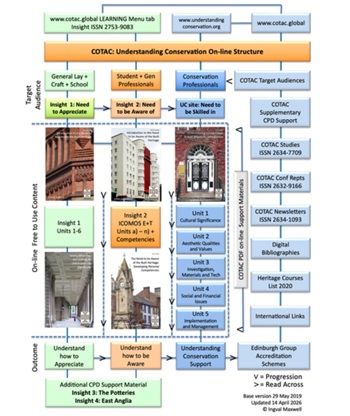
Building competence for the future of built heritage.
Building Regulations and Building Safety Act

CIOB publishes free advice for non-domestic clients.

Building Safety Newsletter from MHCLG.

An extraordinary record of steel engineering worldwide.

Households living near new pylons to save on bills.

ECA warns growth must not outpace grid capacity or skills.
The role of the client and decision making

CIOB response to built environment professions call for evidence.
Construction's sustainability reporting revolution

Tracking upfront embodied carbon with digital tools.
ECA welcomes procurement reforms

Public spending must back British jobs and skills.
Campaigning for Edinburgh: the Cockburn Association 1875-2049

The role of the civic voice in protecting character. Book review.