





2016 Carbuncle Cup

On 7th September, Building Design awarded the dubious honour of the Carbuncle Cup for 2016 to London’s Lincoln Plaza high-rise development.
The Carbuncle Cup is an annual architectural prize awarded to ‘the ugliest building in the United Kingdom completed in the last 12 months’. A shortlist is compiled from public-voted nominations, and the winner decided by a panel of critics.
Lincoln Plaza’s victory makes it the fifth consecutive year that London has received the award.
Lincoln Plaza is located in South Quay, neighbouring Canary Wharf, and was developed by Galliard Homes and designed by the firm BUJ Architects.
The precise location was one of the factors in the panel’s decision, with them criticising the developer’s marketing commentary which sought to describe the tower as being situated in the more prestigious district of Canary Wharf.
The tower is characterised by its irregular stacked-box form, jutting rectangular balconies and Tetris-like coloured aluminium cladding. The panel described the tower as being:
‘...a putrid pugilistic horror show that should never have been built. In its bilious cladding, chaotic form, adhesive balconies and frenzied facades, it exhibits the absolute worst in shambolic architectural design and cheap visual gimmickry.’
It joins the ‘illustrious’ pantheon of ‘crimes against architecture’ such as the Walkie-Talkie building, Woolwich Central, and Strata SE1. See an overview of previous winners here.
The other shortlisted projects that were beaten by Lincoln Plaza were as follows:
Saffron Square, Croydon

The Diamond, University of Sheffield

One Smithfield, Stoke-on-Trent

Poole Methodist Church extension, Poole

5 Broadgate, London

[edit] Find out more
[edit] Related articles on Designing Buildings Wiki
- 2017 Carbuncle Cup.
- 2018 Carbuncle Cup.
- Architectural styles.
- Building of the week series.
- Carbuncle Cup.
- Concept architectural design.
- RIBA Stirling Prize 2016.
- Unusual building design of the week.
[edit] External resources
Featured articles
Check out some of the best features and news from Designing Buildings as well as key stories from around the web.

ECA welcomes plans to strengthen subcontractor quality control.

Combining mid-career qualifications with experience broadens career opportunities.

Why being a mentor can help your career.

Channel 4 broadcaster to host 125th anniversary ceremony.
Listed structures on the rail network
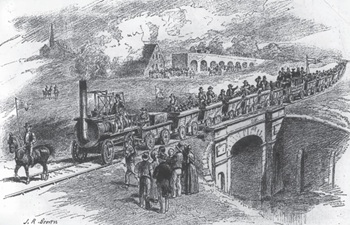
Heritage interests and operational requirements must be balanced.
Historic England publishes research into embodied carbon when retrofitting traditional buildings.

New Prime Minister delivers on ECA call for cut in electricity costs.

CIOB reacts to the announcement of Andy Burnham as Prime Minister.

Heritage and conservation science workforce survey - Have your say.
England's Suburbs 1820-2020. Book review.

New, more proportionate and targeted approach for higher-risk building assessments.
Government brings British Steel into public ownership.