





Walls of Containment: the architecture and landscapes of lunacy

|
| Walls of Containment: the architecture and landscapes of lunacy, Patrick Quinlan, UCD Press, Dublin, 2021, 288 pages, colour and black-and-white illustrations, hardback. |
It was the writer’s work as an architect based in London that first attracted my attention and led me to discover his research on Irish asylums. Walls of Containment is a classic, which developed from a master’s degree in 2014 covering the heritage of buildings constructed as places of refuge for victims of mental health issues. A PhD is now registered by way of continuation.
Covering all periods from the beginnings of the asylum system in 1814 to around 2014, the book covers the various phases of architectural development as they were played out against political and religious changes sweeping the island of Ireland during its turbulent 19th- and 20th-century history. David Killeen provides a photographic record of the surviving structures in colour. These pictures accompany a wealth of plans, maps and archive photos that bring the text vividly to life. Book lists follow, with all the other elements of a serious, well-researched and broad study.
In the UK many workhouses and other such buildings have been listed and most local authorities have evidence of walls of containment in their district. My own house stands across the road from a future development site where Italian and German prisoners of war were held in the 1940s during an almost forgotten episode. Nearby are more remains of a former workhouse that was eventually converted into flats or second homes, and a former isolation hospital situated deep in the woods, where tuberculosis was treated in buildings designed by a young Charles Holden.
‘The Big House’ could once have been found in most Irish cities and towns, or at more isolated spots where land was available for massive buildings. The population in care reached a height of about 20,000 at its peak in 1914 until progress in social care and pharmacology led to a slow, protracted decline in numbers. A further 100 years would pass before we reach the current position with the buildings now abandoned, demolished or repurposed.
Quinlan takes us carefully through the whole, sad story of ‘the most solitary of afflictions’, and its results in architecture and preservation. The earliest structures were rigidly planned with male and female segregation, leading to an obsessive symmetry in layout, with a Master’s House at the focus. As the 19th century progressed, other layouts came in and out of fashion. The old houses of ‘lunacy’ became regarded as being too much like prisons, with their rows of cells along the sides of corridors. When allowed, other inmates were given dormitories in which to sleep, but the hours of confinement were long.
Not only are we presented here with a stunning volume of history but Quinlan’s formula of 10 introductory chapters, each dealing with a phase of Irish hospital theory and practice, followed by 29 case studies in which single sites are thoroughly discussed and illustrated, provides an ideal formula. It brings a massive subject within the reader’s grasp.
Other topics might benefit by this treatment: missions to seamen, for example? The taverns and hotels of the temperance movement? Hostels of all types once existed for a transient workforce and their buildings deserve attention. Each is almost global in extent, but comes from the opposite end of the social scale from the stately homes, city mansions or great churches that are the normal subject of architectural history publication.
This article originally appeared as ‘Solitary afflictions’ in the Institute of Historic Building Conservation’s (IHBC’s) Context 175, published in March 2023. It was written by Graham Tite, conservation officer employed under contract.
--Institute of Historic Building Conservation
[edit] Related articles on Designing Buildings
IHBC NewsBlog
Busaries open for IHBC's Annual School 10-12 June 2027

Apply for funded places for #IHBCBristolBath2027 until 1 February 2027
London's oldest restaurant given to National Trust

Rules will continue to open and income will fund conservation
No right to cross-pavment charging in England's conservation areas

Residents excluded from new permitted development rights
Save the Date for #IHBCBristolBath2027 on 'Climate Change & Significance'

Register now for updates on IHBC's Annual School 10-12 June 2027
Bath could pause UNESCO World Heritage Site status
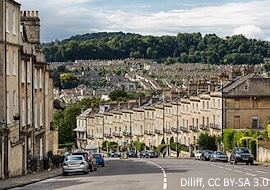
Consultation on scheme to hit housing targets runs until 30 October 2026
Canals offer increasing innovation opportunities
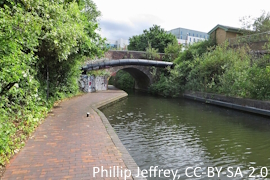
Canal & River Trust sees canals playing role in UK's water security
IHBC sponsors Gardens Trust event 23-4 Sept 2026
.jpeg)
'Learning from the Past, Shaping the Future’ takes place in Milton Keynes
Renovations to Frank Lloyd Wright's Fallingwater complete
.jpg)
World Heritage Preserved project opens house for tours again
Shakespeare Birthplace Trust places Hall's Croft on HAR Register
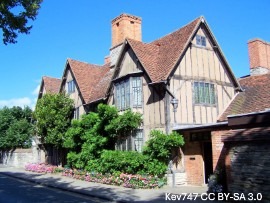
Stratford-upon-Avon home of Shakespeare's daughter is 'At Risk'
Lady Grange’s House repaired on St Kilda
.jpg)
National Trust for Scotland repairs stone cleit with link to famous island resident
Griff Rhys Jones on BBC Radio 4 Today programme
,_Green_Lane,_Derby.jpg)
The Victorian Society’s President unveiled its latest Top Ten Endangered Buildings 2026.
Need a MATE? Book your place now.

IHBC offers free webinars on applying for IHBC accreditation (Full & Associate).
UK Stained Glass Repository finds windows new homes
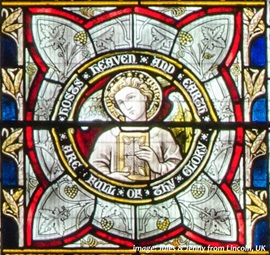
How are stained glass windows are rescued, stored and repurposed?
APPGEBE report sets high aims for quality
'Government must not sacrifice quality in drive to build 1.5m homes'
New measures protect Historic Shipwrecks from heritage crime

Underwater cultural heritage benefits from new HE guidance
How could the City of London skyline look in 6 years' time?

Visualisation shows approved planning applications as completed buildings
National Trust for Scotland calls for VAT cuts
Heritage neglect is encouraged by current policies
IHBC's 'Context' Issue 186 features Industrial Heritage
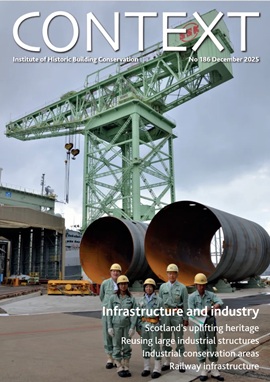
IHBC's members' journal reports on the challenges of conserving infrastructure
Book now for IHBC Annual School 2026
IHBC Annual School is taking place 18-20 June 2026 in Newcastle
RICHeS Research Infrastructure offers ‘Full Access Fund Call’
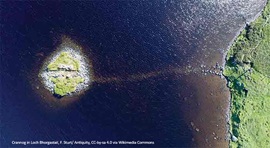
RICHeS offers a ‘Help’ webinar on 11 March
Latest IHBC Issue of Context features Roofing
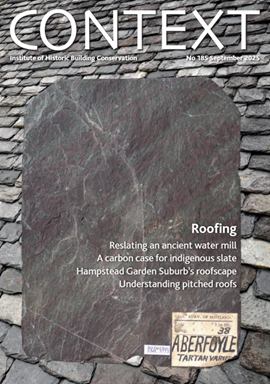
Articles range from slate to pitched roofs, and carbon impact to solar generation to roofscapes
Three reasons not to demolish Edinburgh’s Argyle House

Should 'Edinburgh's ugliest building' be saved?
IHBC’s 2025 Parliamentary Briefing...from Crafts in Crisis to Rubbish Retrofit
IHBC launches research-led ‘5 Commitments to Help Heritage Skills in Conservation’
How RDSAP 10.2 impacts EPC assessments in traditional buildings

Energy performance certificates (EPCs) tell us how energy efficient our buildings are, but the way these certificates are generated has changed.