





The Georgian No 1, 2024
The latest issue of The Georgian (No 1, 2024) is particularly worth seeking out for three insightful articles. In the first, Will Palin, CEO of Barts Heritage and a trustee of the Georgian Group, describes the restoration of Sheerness Dockyard Church, winner of the 2003 Georgian Group Architectural Award. The church was the subject of a serious fire in 2021, within a few hours reducing the Grade II*-listed landmark building of 1823 to a charred shell. After the church had been shown sold to a developer, who obtained permission for a clearly unviable scheme to convert it into 19 residential units, the building languished for nearly ten years until a campaign led by SAVE (with the help on the Georgian Group and the Spitalfield Trust), led ultimately to Swale Borough Council serving a CPO, before passing the building first to the trust and then to the newly formed Sheerness Dockyard Trust.
The meticulous repairs to the exterior have been exemplary, and imaginative and sympathetic adaptation has converted the interior to a business use, offering co-working for start-ups and business mentoring of young people between 16 and 30, event and meeting room hire and a cafe. This well-illustrated article demonstrates the power of persistence, and that exemplary conservation-led restoration can revive even the most broken and neglected historic building if the vision, energy and willpower are there.
In the second article, ‘Back to the Future’, Hugh Petter, director of ADAM Urbanism and Adam Architecture, explores how smaller-scale examples of development of the Georgian era could influence building today. This may have particular resonance for those struggling with the current obsession for planning authority-imposed pattern books, masterplanning and design codes, while looking at the practicalities of applying the current building regulations, and implications for materials and construction.
Finally, the eighth instalment of the series on authentic historic details, drawn from the Charles Brookings Collection, illustrates in colour many Georgian front doors. It may prove useful for those who lack a clear understanding of what genuine Georgian patterns involve.
In a column of this kind, it is sometimes difficult to do justice to substantial yearly publications. But particular attention should be drawn to the annual Journal of Historic Buildings and Places (Vol 3, 2024), which has five articles and runs to 198 pages overall. Similarly, the Georgian Group Journal (Vol 32, 2024) has 16 articles and runs to a remarkable 274 pages. Both highlight one of the significant benefits of membership to these national amenity societies.
This article originally appeared in the Institute of Historic Building Conservation’s (IHBC’s) Context 181, published in September 2024.
--Institute of Historic Building Conservation
Related articles on Designing Buildings Conservation.
IHBC NewsBlog
IHBC sponsors Gardens Trust event 23-4 Sept 2026
.jpeg)
'Learning from the Past, Shaping the Future’ takes place in Milton Keynes
Renovations to Frank Lloyd Wright's Fallingwater complete
.jpg)
World Heritage Preserved project opens house for tours again
Shakespeare Birthplace Trust places Hall's Croft on HAR Register
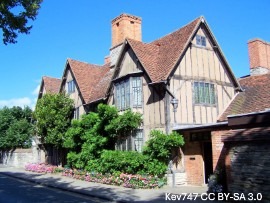
Stratford-upon-Avon home of Shakespeare's daughter is 'At Risk'
Lady Grange’s House repaired on St Kilda
.jpg)
National Trust for Scotland repairs stone cleit with link to famous island resident
Griff Rhys Jones on BBC Radio 4 Today programme
,_Green_Lane,_Derby.jpg)
The Victorian Society’s President unveiled its latest Top Ten Endangered Buildings 2026.
Need a MATE? Book your place now.
IHBC offers free webinars on applying for IHBC accreditation (Full & Associate).
UK Stained Glass Repository finds windows new homes
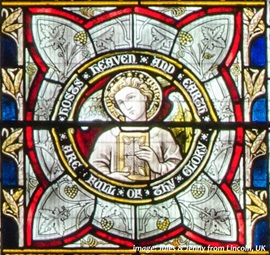
How are stained glass windows are rescued, stored and repurposed?
APPGEBE report sets high aims for quality
'Government must not sacrifice quality in drive to build 1.5m homes'
New measures protect Historic Shipwrecks from heritage crime

Underwater cultural heritage benefits from new HE guidance
How could the City of London skyline look in 6 years' time?

Visualisation shows approved planning applications as completed buildings
National Trust for Scotland calls for VAT cuts
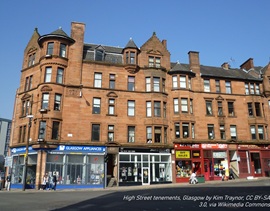
Heritage neglect is encouraged by current policies
IHBC's 'Context' Issue 186 features Industrial Heritage
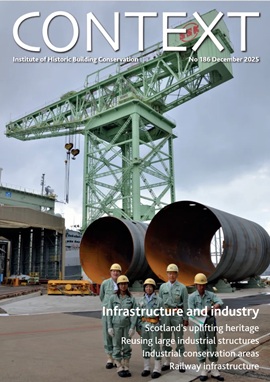
IHBC's members' journal reports on the challenges of conserving infrastructure
Book now for IHBC Annual School 2026

IHBC Annual School is taking place 18-20 June 2026 in Newcastle
RICHeS Research Infrastructure offers ‘Full Access Fund Call’
RICHeS offers a ‘Help’ webinar on 11 March
Latest IHBC Issue of Context features Roofing
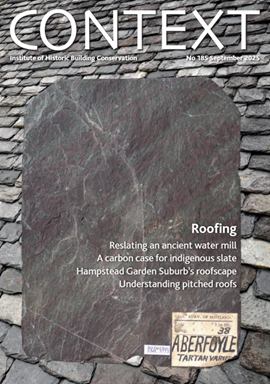
Articles range from slate to pitched roofs, and carbon impact to solar generation to roofscapes
Three reasons not to demolish Edinburgh’s Argyle House

Should 'Edinburgh's ugliest building' be saved?
IHBC’s 2025 Parliamentary Briefing...from Crafts in Crisis to Rubbish Retrofit
IHBC launches research-led ‘5 Commitments to Help Heritage Skills in Conservation’
How RDSAP 10.2 impacts EPC assessments in traditional buildings

Energy performance certificates (EPCs) tell us how energy efficient our buildings are, but the way these certificates are generated has changed.