





Soil report
Construction activities can have an adverse effect on soils and so its impacts need careful consideration as part of the development process. Local authorities may require a soil report as part of the planning application process.
A soil report is generally prepared by geotechnical engineers or civil engineers following a soil survey. It should provide an indication as to whether the site is suitable for the proposed construction, i.e. whether the soil and geological conditions will be able to provide the required support and stability. Consideration of the allowable soil bearing pressure and the possibilities of settlement is of particular importance.
The report may be incorporated into a Material Management Plan and Site Waste Management Plan. It can also be used by structural engineers to inform the choice of foundation design.
Some of the details that should be included in a soil report are:
- Classification of the various types of soil encountered and a description of the characteristics.
- A discussion of the potential for re-use of soils on site.
- Recommendations for the handling and storage of soils on site.
- Maps showing the locations of soils on site.
- The geological history of the area.
- Details of the sampling (e.g. borehole location, depth, soils encountered at each level).
- Groundwater conditions.
- Bearing capacity of the soil.
- Chemical composition of the soil.
- Seismic conditions prevalent in the area, if appropriate.
- Recommendations for foundation design.
[edit] Related articles on Designing Buildings Wiki
Featured articles
Check out some of the best features and news from Designing Buildings as well as key stories from around the web.

New and updated CLC building safety guidance.
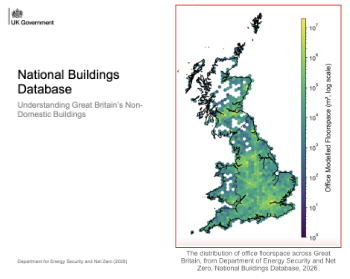
New UK National Buildings Database.
Building Safety Wiki Interviews

Chief executive of the British Woodworking Federation.
Planning condition discharge in England and Wales

A brief explanation from a building compliance expert, with further links.
Overheating guidance and tools for building designers

Guidance for dealing with element of building fabric control that have increasing importance.
Shading for housing, a design guide

From the Good Homes Alliance and British Blind and Shutter Association.
UK Standard Skills Classification (SSC)

A shared framework for describing skills needs.
Social media ban consultation comes to close

CIOB urges UK Government to consider social media’s role in careers guidance in ban debate.
The latest of eight Skills England apprenticeship units

The addition of battery manufacturing welcomed by ECA with a warning about the risks of fast-tracked apprenticeship units.
Building Control Independent Panel final report
A precis of a key report led by Dame Hackitt with full recommendations and link to the government response.
Building Safety recap April, 2026
A short and longer run-through of the month, with links to further information and sources.