





Restoration Stories: patina and paint in old London houses

Restoration Stories: patina and paint in old London houses, Phillipa Stockley, photography Charlie Hopkinson, 2019, 223 pages, Pimpernel Press, hardback.
As the novelist Ralph Ellison phrased it, old houses speak to our ‘lower frequencies’. They resonate with us in ways that can be hard to explain, talk to bits of us of which we were unconscious. Like moths to a pheromone trap, open the door to these houses and you are ensnared.
This book features 16 London houses, mainly 18th and early- 19th century in Spitalfields, where the owners have been happily ensnared. But just as the buildings nurture us, they also need us to nurture them. These are stories of thoughtful and considerate conservation. Stockley, an architectural and interiors journalist, calls the owners ‘modest, conscientious conservationists.’
Of one owner she writes: ‘He has done very little, and that when only absolutely necessary’. Another is allowing 10 years to scrape back the paint layers and yet another owner bemoans the need to put a bathroom in the house at all: ‘nothing ruins a Georgian house like too many bathrooms.’
It is no surprise that many of the houses are inhabited by artistic people: a sculptor, a paint maker, a jeweller, a film-maker and a writer, among others. Perhaps they are more driven by their emotional connection to the building and its aesthetics, and less likely to look at the uncomfortable facts. Many had highs of finding panelling or fireplaces behind plasterboard, or flagstones under concrete and lino. The flip side was finding unsupported beams with rotten ends, holes in the roof or dry rot.
One owner recalls that his basement had been a bomb shelter and was lined with concrete, the windows filled with concrete blocks; another that the boiler belched out carbon monoxide fumes and the cooker was called the Falcon Dominator. But dominating is not what these owners do. These are stories of quietly listening and encouraging the building to be itself; the antithesis of imposed industrial-strength facelifts.
Along with the hob grates, rim locks and hinges that were painstakingly sourced, many of the owners also had to acquire nerves of steel. One owner took on a Spitalfields house thinking there was not much to do, only to find that, actually, there was everything to do. Her husband left in the middle of the project and, with her finances depleted, she wondered how to continue. She recounts a visit from her structural engineer. ‘He said “Once in every 100 years a house needs a decent owner and, fortunately for this house, Oriel, that’s you.” And I thought, oh shit.’ But, reader, she completed the project and lives in the house still.
Many of these houses were saved by the Spitalfields Trust, which began when Dan Cruickshank squatted in a partially demolished house of 1725 to prevent further destruction. The trust has gone on to be hugely successful, having rescued over 70 buildings since 1976 with the motto: ‘Do not be afraid to go where others demur. Saving and finding a new use for an historic building is more important than profit.’
In the 1970s and 80s Cruickshank could be found quietly salvaging bits of panelling, ironmongery and fireplaces from skips, discarded by less sympathetic owners. He stored them safely until a building found a sensitive owner to whom the original fabric was returned. The house that he squatted in is once again a home, and it features in the book.
There is gorgeous photography recording how some owners live in spartan splendour with just a few sticks of furniture, while others furnish their houses as if they were a Blenheim or a Houghton. Chipped paintwork, nail-scarred timber, wobbly glass and worn furniture feature throughout, drawing the reader into the stories. One owner explains being drawn to ‘splits and repairs in panels, and I like teapots with mended handles, or porcelain bowls with staples.’
This atmospheric book shows the virtues of patient and thoughtful conservation. It is one to recommend to anyone who wants their listed building consent now and the project finished tomorrow. It might just open their eyes to a slower form of conservation and the benefits of a light hand.
This article originally appeared as ‘A light hand’ in IHBC's Context 164 (Page 51), published by The Institute of Historic Building Conservation in March 2020. It was written by Kate Judge, architectural historian.
--Institute of Historic Building Conservation
Related articles on Designing Buildings
IHBC NewsBlog
IHBC sponsors Gardens Trust event 23-4 Sept 2026
.jpeg)
'Learning from the Past, Shaping the Future’ takes place in Milton Keynes
Renovations to Frank Lloyd Wright's Fallingwater complete
.jpg)
World Heritage Preserved project opens house for tours again
Shakespeare Birthplace Trust places Hall's Croft on HAR Register
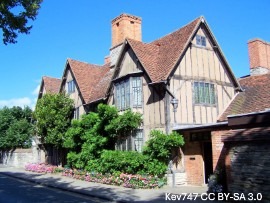
Stratford-upon-Avon home of Shakespeare's daughter is 'At Risk'
Lady Grange’s House repaired on St Kilda
.jpg)
National Trust for Scotland repairs stone cleit with link to famous island resident
Griff Rhys Jones on BBC Radio 4 Today programme
,_Green_Lane,_Derby.jpg)
The Victorian Society’s President unveiled its latest Top Ten Endangered Buildings 2026.
Need a MATE? Book your place now.

IHBC offers free webinars on applying for IHBC accreditation (Full & Associate).
UK Stained Glass Repository finds windows new homes
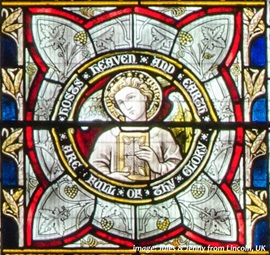
How are stained glass windows are rescued, stored and repurposed?
APPGEBE report sets high aims for quality
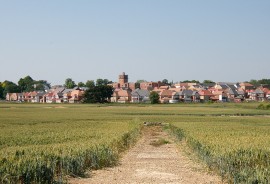
'Government must not sacrifice quality in drive to build 1.5m homes'
New measures protect Historic Shipwrecks from heritage crime

Underwater cultural heritage benefits from new HE guidance
How could the City of London skyline look in 6 years' time?

Visualisation shows approved planning applications as completed buildings
National Trust for Scotland calls for VAT cuts

Heritage neglect is encouraged by current policies
IHBC's 'Context' Issue 186 features Industrial Heritage
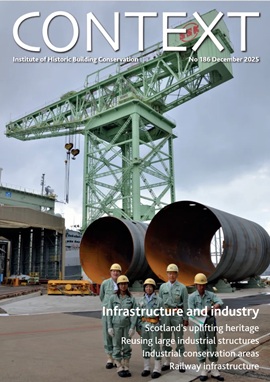
IHBC's members' journal reports on the challenges of conserving infrastructure
Book now for IHBC Annual School 2026

IHBC Annual School is taking place 18-20 June 2026 in Newcastle
RICHeS Research Infrastructure offers ‘Full Access Fund Call’
RICHeS offers a ‘Help’ webinar on 11 March
Latest IHBC Issue of Context features Roofing
Articles range from slate to pitched roofs, and carbon impact to solar generation to roofscapes
Three reasons not to demolish Edinburgh’s Argyle House

Should 'Edinburgh's ugliest building' be saved?
IHBC’s 2025 Parliamentary Briefing...from Crafts in Crisis to Rubbish Retrofit
IHBC launches research-led ‘5 Commitments to Help Heritage Skills in Conservation’
How RDSAP 10.2 impacts EPC assessments in traditional buildings

Energy performance certificates (EPCs) tell us how energy efficient our buildings are, but the way these certificates are generated has changed.