





Quarry tile

|
[edit] Introduction
Quarry tiles are a traditional flooring material used for both internal and external purposes. Being made of burnt clay, they are very durable, sometimes lasting many decades, with some varieties also being frost resistant. They come in a range of colours including red, brown, grey, purple and black. One of the most extensive external uses of quarry tiles in modern times was in the 1960s and 70s at the Barbican development in London.
Clay floor tiles have been used since Roman times, but fell out of favour during the Middle Ages. The most likely cause of this is that the techniques introduced by the Romans had been neglected or forgotten. However, the industrial revolution produced a revival of interest during Victorian times when alongside bricks, they were mass-produced for homes, churches and public buildings.
Today, they are considered a 'natural' material as they are made of burnt clay and used widely, particularly for hearths, conservatories and kitchens, where they can harmonise with both modern and traditional designs. As well as floors, they can also be used on walls and worktops. They are also used industrially.
Installation: Quarry tiles are usually bedded on a 10mm-thick bed of cement mortar spaced 9-10mm apart and with joints filled with cement grout. Wall junctions can be concealed with a cove tile for easier cleaning, while a range of special bullnose-edged tiles can be used for terminations, edges etc.
[edit] Manufacture
Quarry tiles are made in a process similar to that of brick, from either extruded or press-formed clay which is kiln-fired at temperatures as high as 2,000ºC. Their dimensions may vary but typically they are 150mm x 150mm (although larger sizes are available) and 13 to 19mm thick. They are unglazed and give good grip underfoot but can also be embedded with an abrasive frit to provide a non-slip finish for applications such as commercial kitchens and laboratories.
Because quarry tiles can be in place for decades, they may require a degree of renovation to restore them to an ‘almost new’ appearance. Cracked and missing tiles can be a problem but can usually be sourced to provide colour shades that are a close match with the original.
Dirty or faded tiles can be restored with alkaline cleaning compounds applied with a rotary floor machine, then rinsed off. A final clean may be applied with a light acid to remove any signs of efflorescence and counter the alkaline cleaner used in the first step. A matt sealing finish can then be applied. The advice of specialists should be sought when renovating quarry tiles.
[edit] Related articles on Designing Buildings Wiki
- Ash or oak wood flooring.
- Beam and block.
- BREEAM Speculative floor & ceiling finishes.
- Domestic floors: Part 1: Construction, insulation and damp proofing.
- Floating floor.
- Floor definition.
- Floor insulation.
- Flooring defects.
- Glass block flooring.
- How to fit carpet.
- Insulation for ground floors.
- Mastic sealant.
- Raised floor.
- Resin flooring.
- Screed.
- Sprung floor.
- Terrazzo.
- Tiles.
- Types of carpet.
- Types of floor.
Featured articles
Check out some of the best features and news from Designing Buildings as well as key stories from around the web.
Building Safety Act implementation in Wales

CIAT to host industry panel on 26 June.
New and updated CLC building safety guidance.
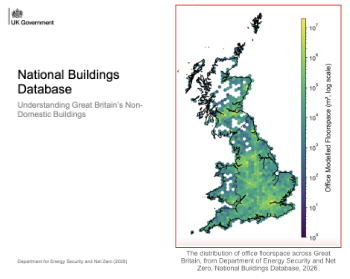
New UK National Buildings Database.
Building Safety Wiki Interviews

Chief executive of the British Woodworking Federation.
Planning condition discharge in England and Wales

A brief explanation from a building compliance expert, with further links.
Overheating guidance and tools for building designers

Guidance for dealing with element of building fabric control that have increasing importance.
Shading for housing, a design guide

From the Good Homes Alliance and British Blind and Shutter Association.
UK Standard Skills Classification (SSC)

A shared framework for describing skills needs.
Social media ban consultation comes to close

CIOB urges UK Government to consider social media’s role in careers guidance in ban debate.
The latest of eight Skills England apprenticeship units

The addition of battery manufacturing welcomed by ECA with a warning about the risks of fast-tracked apprenticeship units.
Building Control Independent Panel final report

A precis of a key report led by Dame Hackitt with full recommendations and link to the government response.