





Light obstruction notice
Rights to light refer to rights to receive sufficient light through an opening (such as a window), allowing ordinary comfortable use and enjoyment of a dwelling, or ordinary beneficial use and occupation of other buildings. Generally, rights to light are acquired by prescription where the light has been enjoyed for 20 years.
Rights to light can become an issue when a new development, or proposed development affect the access to light of an adjoining property. Rights to light also apply to obstructions caused by trees, hedges and so on, but there are no rights to light for open ground.
Rights to light are attached to the land and so can perpetuate even if a new building is constructed. It cannot be assumed that no rights to light exist simply because neighbouring buildings appear to be new.
Rights to light by prescription may be lost if an infringement is submitted to for a year without making a claim.
See Rights to light for more information.
It is possible to prevent rights to light being acquired by creating a continuous obstruction to the light for 12 months, starting before 19 years enjoyment of the light has accumulated. However there is obviously considerable risk to doing this.
Alternatively, Light Obstruction Notices (LON) can be registered under the Rights of Light Act 1959, even where no obstruction has actually been created yet. If the notice is not challenged within a year the notional infringement of the enjoyment of the light can be considered to have been accepted, the rights defeated, and the 20-year clock ‘reset’.
Notice of LON’s must be given to affected parties in a way determined by the Lands Tribunal and LON’s must be registered with the local authority on the Local Land Charges Register. Applications for registration should include:
- An application form.
- A plan showing the location of the property enjoying the light and the proposed obstruction.
- A Lands Tribunal certificate confirming that appropriate notices have been given to affected parties.
If the LON remains valid for a year, then any accruing rights are defeated.
LONs can be challenged if an affected party can demonstrate that they have had enjoyment of the light for 20 years. They can either be challenged or negotiated directly with the applicant, or challenged through the courts, and this may result in cancelling or altering the notice.
LON's are a relatively inexpensive way of defeating rights, and can be used even if it is only suspected that there may be rights, simply to identify potential claims.
If the applicant can demonstrated to the Lands Tribunal that the application is urgent, an expedited process may be adopted, and a temporary certificate given, which is followed later by the definitive certificate.
[edit] Related articles on Designing Buildings Wiki
- Adequate view out.
- BREEAM Reduction of night time light pollution.
- Easements.
- Light pollution.
- Lighting of construction sites.
- Nuisance.
- Openable window area.
- Restrictive covenants.
- Right of support.
- Rights of way.
- Right to a view.
- Rights to light.
- Tree rights.
- Value in the view: conserving historic urban views.
Featured articles
Check out some of the best features and news from Designing Buildings as well as key stories from around the web.
New and updated CLC building safety guidance.
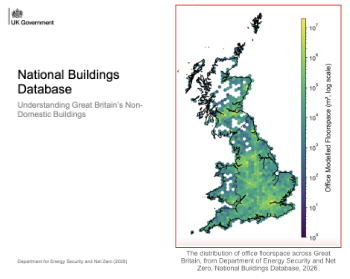
New UK National Buildings Database.
Building Safety Wiki Interviews

Chief executive of the British Woodworking Federation.
Planning condition discharge in England and Wales

A brief explanation from a building compliance expert, with further links.
Overheating guidance and tools for building designers

Guidance for dealing with element of building fabric control that have increasing importance.
Shading for housing, a design guide

From the Good Homes Alliance and British Blind and Shutter Association.
UK Standard Skills Classification (SSC)

A shared framework for describing skills needs.
Social media ban consultation comes to close

CIOB urges UK Government to consider social media’s role in careers guidance in ban debate.
The latest of eight Skills England apprenticeship units

The addition of battery manufacturing welcomed by ECA with a warning about the risks of fast-tracked apprenticeship units.
Building Control Independent Panel final report
A precis of a key report led by Dame Hackitt with full recommendations and link to the government response.
Building Safety recap April, 2026
A short and longer run-through of the month, with links to further information and sources.