





Levelling applications
Contents |
[edit] Introduction
In surveying, levelling is a process of determining the height of one point (or level) relative to another. It is used in surveying to establish the elevation of a point relative to a datum or to establish a point at a given elevation relative to a datum. Several different surveying instruments can be used for levelling, all of which are loosely referred to as ‘levels’, for example, a spirit level.
Different types of levelling include:
[edit] Fly levelling
Fly levelling is a quick way of establishing a new temporary benchmark. The benchmark will help with the calculation of reduced levels. A temporary benchmark is usually used on smaller construction projects. On larger projects, levels will be linked to the Ordnance Survey Benchmarks.
Fly levelling is used for transferring levels and the only readings required are the backsight and foresight recordings. The intermediate sight readings are not used but the distance between readings should not exceed 50m. Fly levelling can be helpful when the benchmark is very far from the work station. In such a case, a temporary benchmark is located at the work station which is based on the original benchmark. It is not highly precise and is used for determining approximate levels only.
[edit] Whole circle bearings
Whole circle bearings refer to angles measured in a clockwise direction from north to establish levels. In whole circle bearing, the value of the bearing will vary from 0° to 360°. The angle between the north line to the survey line must be measured to establish the whole circle bearing. Co-ordinates are used in the calculations for whole circle bearings. The seconds, minutes and degrees of known points are used and deducted from each other to calculate the unknown angles’ co-ordinates.
[edit] Traverse types
Traverse levelling is the measure of the lengths and directions of a series of straight lines connecting a series of points. The straight lines are called traverse legs, and points are called a traverse station.
There are different types of traverse levelling applications:
- Open traverse - Has a different start and endpoint. It begins at a point of known control and ends at a station whose relative position is known only by computations.
- Closed traverse - Has the same start and endpoint.
- Directional travers - Extends directional control only. This type of traverse can either be open or closed.
See also: Levelling in surveying.
[edit] Related articles on Designing Buildings Wiki
- Building survey.
- Condition survey.
- How to layout a building.
- Land surveying.
- Laser scanning.
- Level.
- Levelling in surveying.
- Measurement of existing buildings.
- Robotic total station.
- Site surveys.
- Surveying instruments.
- Surveyor.
- Verticality.
[edit] External references
BTEC National Construction Student Book - Pearson
Featured articles
Check out some of the best features and news from Designing Buildings as well as key stories from around the web.

Your views needed - a strategy for the professions, trades and occupations.

Confronting competency, codes, capacity and costs.

The hidden risk in modern construction supply chains.
Construction Management, 10 June

24 months to 14: CITB launches accelerated apprenticeships.
Bridging the gap between clients and contractors

Concerns remain around contractor quality, capability, and delivery.
Construction Management, 10 June.
Heat pumps beat boilers in new home tests.
Building Safety Act implementation in Wales

CIAT to host industry panel on 26 June.
New and updated CLC building safety guidance.
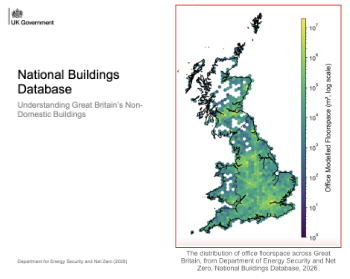
New UK National Buildings Database.
Building Safety Wiki Interviews

Chief executive of the British Woodworking Federation.
Planning condition discharge in England and Wales

A brief explanation from a building compliance expert, with further links.