





Laissez faire
Laissez faire is a French term which, translated literally, means ‘leave to do’ or ‘leave things as they are’. It is probably a contraction of ‘laissez-nous faire’ - let us do it. It is seen as a product of the 18th century Enlightenment, allowing humans to realise their potential without the hindrance of government. Adam Smith was one of the most famous proponents of laissez-faire and regarded it as a moral philosophy that allowed markets to function as natural, organic systems.
Today, laissez faire has become primarily an economic and political doctrine of the Right which advocates non-intervention (particularly by government) in the running of things in the belief that this will result in the best possible outcomes for everyone. This approach is sometimes called laissez-faire capitalism and involves no government intervention, regulation or the application of tariffs. Businesses are free to develop without any restrictions from government which, in addition, should not interfere in people’s lives. However, when these principles are contravened, the government can be accused of acting like a ‘nanny’ state.
Classic laissez faire is generally at odds with socialism (and to a certain extent liberalism) which tends to advocate maximum state intervention and control of the factors of production – land, labour and capital. However, there is a left-wing brand of laissez-faire also known as left-wing anti capitalism. This claims that true laissez-faire would eventually result in an anti-capitalist society.
Generally, modern British laissez faire opposes state intervention in national policies and in particular, taxation, beyond that required to maintain a minimal state of peace, security and property rights. This was the basic view of Thatcherism, and in particular, of the American economist Milton Friedman. Indeed, advocates of laissez-faire propose a complete absence of government interference, underpinned by a belief in the superior operation of the free market: left to its own devices, it is able through competition to dispense with inefficiencies in a faster and more effective (some would say ruthless) manner than any legislation could do.
Laissez faire is also a type of leadership, sometimes called delegative leadership, in which leaders play a background role and allow group members to make the decisions. It is thought to be effective where the leader is motivated and highly skilled.
Concerning freedom of choice, on a more individual level, laissez faire can mean being able to choose things and certain courses of action without too much control from someone in higher authority.
[edit] Related articles on Designing Buildings Wiki
Featured articles
Check out some of the best features and news from Designing Buildings as well as key stories from around the web.
Bridging the gap between clients and contractors

Concerns remain around contractor quality, capability, and delivery.
Construction Management, 10 June.
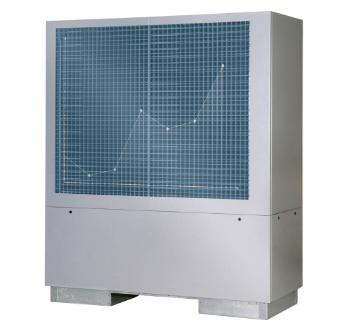
Heat pumps beat boilers in new home tests.
Building Safety Act implementation in Wales

CIAT to host industry panel on 26 June.
New and updated CLC building safety guidance.
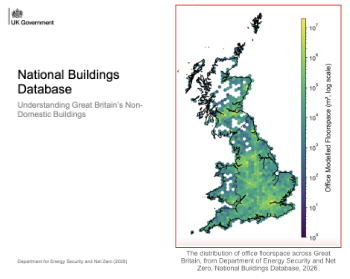
New UK National Buildings Database.
Building Safety Wiki Interviews

Chief executive of the British Woodworking Federation.
Planning condition discharge in England and Wales

A brief explanation from a building compliance expert, with further links.
Overheating guidance and tools for building designers

Guidance for dealing with element of building fabric control that have increasing importance.
Shading for housing, a design guide

From the Good Homes Alliance and British Blind and Shutter Association.
UK Standard Skills Classification (SSC)

A shared framework for describing skills needs.
Social media ban consultation comes to close

CIOB urges UK Government to consider social media’s role in careers guidance in ban debate.