





How to operate the Construction Industry Scheme (CIS) as a limited company or sole trader
If you’re working in the UK construction industry—either as a sole trader or through a limited company—you need to understand how the Construction Industry Scheme (CIS) operates. HMRC has strict rules, and complying with CIS requirements is essential to avoid penalties, manage cash flow effectively, and build business credibility.
In this blog, we break down how to operate CIS depending on whether you’re a contractor or subcontractor, and how it applies differently to limited companies and sole traders.
Contents |
[edit] What is the Construction Industry Scheme (CIS)?
The CIS is a tax scheme designed by HMRC to ensure proper income tax and National Insurance deductions for workers in the construction industry. Under CIS, contractors deduct money from a subcontractor’s payments and pass it to HMRC. These deductions count as advance payments towards the subcontractor’s tax and National Insurance liabilities.
Whether you operate as a limited company or a sole trader, if you’re working as a contractor or subcontractor in construction, CIS likely applies to you.
[edit] CIS for Sole Traders
[edit] Registering as a Sole Trader Under CIS
If you’re self-employed, registration is straightforward. Register online with HMRC as a sole trader and then sign up for CIS as a subcontractor or contractor—or both.
Register for CIS as a contractor or subcontractor on GOV.UK
Once registered, you’ll be subject to the standard CIS rules, including:
- 20% tax deductions if you're registered
- 30% if you’re not registered
- Monthly reporting obligations if you’re also a contractor
Learn more about operating under CIS as a sole trader:
dnsassociates.co.uk/blog/what-you-need-know-as-a-cis-subcontractor
[edit] CIS for Limited Companies
If you operate through a limited company, the company itself can be a subcontractor, a contractor, or both.
[edit] Key Responsibilities:
- Subcontractor Company: The company gets paid after CIS deductions unless registered for gross payment status.
- Contractor Company: You must verify subcontractors with HMRC and submit monthly returns.
[edit] Gross Payment Status (GPS)
Limited companies can apply for Gross Payment Status so they receive payments in full without deductions. To qualify, you must meet certain turnover and compliance requirements.
[edit] Monthly CIS Filing Requirements
All contractors—sole traders or limited companies—must submit monthly CIS returns to HMRC. These returns must include all payments made to subcontractors, and whether deductions were made.
[edit] Real-Time Reporting with HMRC
If you’re also running payroll, you may need to submit:
Learn about submitting EPS to HMRC
HMRC payroll reporting overview
Missing a deadline can lead to automatic penalties, so staying compliant is crucial.
[edit] Working with CIS Accountants
Whether you’re a limited company or a sole trader, it’s often best to work with a qualified CIS accountant who can manage your compliance, deductions, and filings.
Need expert help with CIS?
Get a callback from dnsassociates.co.uk
[edit] Final Thoughts
Operating under the Construction Industry Scheme requires careful attention to detail. For sole traders, registration and accurate record-keeping are key. For limited companies, there are added layers of complexity—especially if you are both a contractor and subcontractor.
To ensure compliance and maximise your income, consider partnering with a CIS expert who understands both the tax rules and the nuances of construction accounting.
Featured articles and news

We're expanding our collaborative mission by launching DB Intelligence, an exclusive market research advisory panel. Built environment professionals can now get paid to share their expertise on industry trends, products and services.
Panel members receive direct financial incentives for participating in research projects like short surveys, 1-2-1 interviews and focus groups. Register today to shape the future of the construction sector.
Social media ban consultation comes to close

CIOB urges UK Government to consider social media’s role in careers guidance in ban debate.
The latest of eight Skills England apprenticeship units

The addition of battery manufacturing welcomed by ECA with a warning about the risks of fast-tracked apprenticeship units.
Building Control Independent Panel final report
A precis of a key report led by Dame Hackitt with full recommendations and link to the government response.
Guide to ISO 19650 for Architecture Firms (2026)
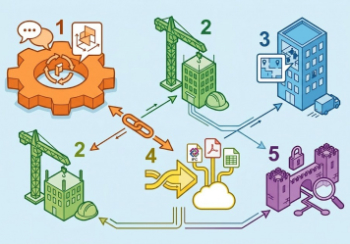
A user gives their low down.

A UK training and membership provider for mould remediation professionals.
Building Safety recap April, 2026
A short and longer run-through of the month, with links to further information and sources.

CIAT May 2026 briefing.

Independent NSI and BAFE study exploring how organisations are changing the way they buy fire safety services.

From medieval scribes to modern word art.

ECA welcomes crackdown on late payment and push for clean energy, whilst CIOB seek fixed cladding removal timeframes.
Cyber Security in the Built Environment
Protecting projects, data, and digital assets: A CIOB Academy TIS.
Managing competence in the built environment

ITFG publishes new industry guide on how to meet the ICC principles.

The UK's campaign to reduce noise pollution: Mythbusting, articles and topic guides.