




Difficult Sites: Architecture Against the Odds
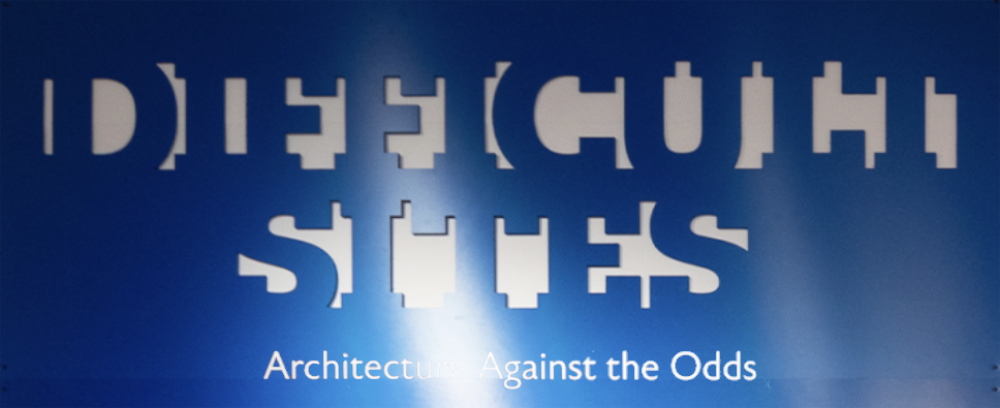
Difficult Sites: Architecture Against the Odds is an exhibition which explores some remarkable feats of architectural achievement in the face of tricky and uncompromising sites and locations across Britain, will close on 31 May at 66 Portland Place, London.
This free exhibition showcases a spectrum of complex, unusual, and dynamic builds undertaken from 1900 to now. Featuring works by some of history’s most renowned architects, including Sir Nicholas Grimshaw, Neave Brown, and Lord Norman Foster, alongside leading contemporary practices such as Tonkin Liu, KnoxBhavan, and Carmody Groarke.
RIBA curator, Pete Collard, says: "Closing in on 10,000 visitors, we’ve been delighted with the response from both the public and professional audiences to the exhibition. Visitors have been engaged by the nuances of the planning process, as represented in the exhibition by projects at the British Library, the National Gallery extension and others, which at first glance might not seem an obvious crowd-pleaser."
Notable inclusions in the exhibition:
Difficult Landscapes
Creek Vean House – a highly influential example of British modernism built into the steeply sloping banks of a Cornish river; Stoneywell – a 2-storey, 11 room Arts and Craft cottage wrapped around a rock on an uneven slope; The Eden Project – an eco-attraction built on a vast disused, clay quarry.
Difficult Urban Spaces
28 ½ Lansdowne Crescent – a family home built on a narrow gap of 13 feet and 3 inches; Alexandra Estate – a low-rise high-density scheme stepped back like a ziggurat and backing directly onto the main Euston railway line; The British Library – negotiating a complex site over two tube lines running underneath along with extensive restrictions from the local council.
Difficult Re-workings
The Weston Tower – the first structural addition to Westminster Abbey since 1745, with a rotated square motif inspired by the adjacent Henry VII Chapel; Astley Castle – a contemporary house inserted behind the crumbling walls of a ruined mediaeval fortified manor; The Magna Science Adventure Centre – an early example of a redundant industrial site being skilfully transformed into a cultural destination.
Difficult Sites: Architecture Against the Odds is at RIBA Architecture Gallery, 66 Portland Place, London, until 31 May 2025.
The article was issued via Press Release as 'Difficult Sites: Architecture Against the Odds - Last chance to see RIBA’s exhibition on Britain’s most complex buildings' dated 30 April, 2025
[edit] Related articles on Designing Buildings
- Concept design report.
- Construction management: feasibility studies.
- Constraints on construction projects.
- Construction site.
- Design and access statement.
- Development appraisal
- Feasibility studies for construction projects
- Main statutory considerations and constraints
- Permitted development.
- RIBA Plan of Work.
- Site information for design and construction.
- Site constraints.
- Traditional contract: feasibility studies.
Featured articles
Check out some of the best features and news from Designing Buildings as well as key stories from around the web.

CIOB celebrates positive Ofsted report.

The Building Safety Regulator announces a call for evidence.

Government approach could undermine delivery and regeneration.
World's first mass timber data centre.

The overlooked environmental aspect of data centre development.
Introduction to radon awareness

New technical information sheet published by CIOB.

Updated supplier guide can help electrical contractors engage with NHP.

CIAT confirm the winners of the 2026 architectural technology awards.

Government launches a one stop shop for flood preparedness.

Sir Edwin Lutyens: Britain's greatest architect? Book review.

CIOB publishes free template to help assess and manage risks.
ECA's reflections on Party Conference season

Burnham wants to be confident of winning before asking for a fresh mandate.
New Chief Construction and Scientific Adviser

Sergio Cavalaro, Professor of Infrastructure Systems at Loughborough University.