





Construction project funding
Funding is the means by which financial resources, typically capital, but sometimes also time, skills, land, information, etc., are provided for the purposes of a construction project. Funding tends to refer to reserves that are internal to the organisation, while the external sourcing of capital is referred to as financing (although the terms are sometimes used as if they are interchangeable).
Public projects can be funded by allocating the necessary amounts from departmental and/or local budgets. If the project crosses more than one departmental budget then the project sponsor is generally responsible for securing project funds by working with different budget holders.
Funding can come from reserves that are already allocated to capital expenditure (capex), which results in the acquisition, construction or enhancement of significant fixed assets including land, buildings and equipment that will be of use or benefit for more than one financial year. For more information, see Capex.
It can also come from operational expenditure (opex), which is expenditure incurred as a result of the day-to-day operations of a business. For more information, see Opex.
Since internal funding is generally limited, conditions are often attached to when funds can be committed, and the business planning cycle is often a determining factor for allocating funds.
There are several funding arrangements based on the formation of partnerships with external organisations, including:
Some projects can be self-funding, which means that the earlier work stages generate enough revenue to fund the later work stages.
External financing of projects can take the form of loans, funds from shareholders, venture capital, grants, donations, subsidies, ‘crowdfunding’, and so on.
Project-based finance (or project-based lending PBL), is a system of financing a project in which the financial security is provided by the property being acquired or developed itself.
[edit] Related articles on Designing Buildings
Featured articles
Check out some of the best features and news from Designing Buildings as well as key stories from around the web.
Building Safety Act implementation in Wales

CIAT to host industry panel on 26 June.
New and updated CLC building safety guidance.
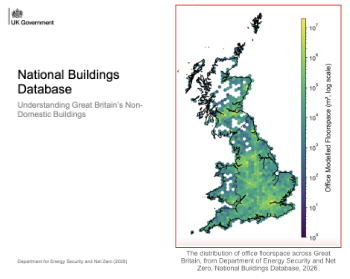
New UK National Buildings Database.
Building Safety Wiki Interviews

Chief executive of the British Woodworking Federation.
Planning condition discharge in England and Wales

A brief explanation from a building compliance expert, with further links.
Overheating guidance and tools for building designers

Guidance for dealing with element of building fabric control that have increasing importance.
Shading for housing, a design guide

From the Good Homes Alliance and British Blind and Shutter Association.
UK Standard Skills Classification (SSC)

A shared framework for describing skills needs.
Social media ban consultation comes to close

CIOB urges UK Government to consider social media’s role in careers guidance in ban debate.
The latest of eight Skills England apprenticeship units

The addition of battery manufacturing welcomed by ECA with a warning about the risks of fast-tracked apprenticeship units.
Building Control Independent Panel final report

A precis of a key report led by Dame Hackitt with full recommendations and link to the government response.