





Caulk v silicone sealant
Silicone is a man-made polymer that is derived from silicon. Silicone sealant is a flexible, adhesive, and resilient to moisture. Some varieties contain a fungicide to increase resistance to mould growth. However, it cannot be painted over. It is suitable for sealing against moisture penetration in bathrooms and kitchens, for example around baths and showers, sinks and so on. It can also be used as a sealant around external doors and windows.
Caulk is a filler material commonly used by decorators. It has a variety of compositions, including rope, acrylic, vinyl and silicone. Caulk is also adhesive and a good sealant. It dries more quickly than silicone sealant, and acrylic caulk can be painted over, but it is not as flexible once dry and it shrinks slightly on drying (meaning a second application may be necessary). This means that caulk is suitable for filling gaps when decorating, such as around skirting and built-in furniture where little movement is expected and over-painting may be required.
[edit] Related articles on Designing Buildings
Featured articles and news

We're expanding our collaborative mission by launching DB Intelligence, an exclusive market research advisory panel. Built environment professionals can now get paid to share their expertise on industry trends, products and services.
Panel members receive direct financial incentives for participating in research projects like short surveys, 1-2-1 interviews and focus groups. Register today to shape the future of the construction sector.
Planning condition discharge in England and Wales

A brief exoplanation from a building compliance expert, with further links.
Overheating guidance and tools for building designers

Guidance for dealing with element of building fabric control that have increasing importance.
Shading for housing, a design guide

From the Good Homes Alliance and British Blind and Shutter Association.
UK Standard Skills Classification (SSC)

A shared framework for describing skills needs.
Social media ban consultation comes to close

CIOB urges UK Government to consider social media’s role in careers guidance in ban debate.
The latest of eight Skills England apprenticeship units

The addition of battery manufacturing welcomed by ECA with a warning about the risks of fast-tracked apprenticeship units.
Building Control Independent Panel final report
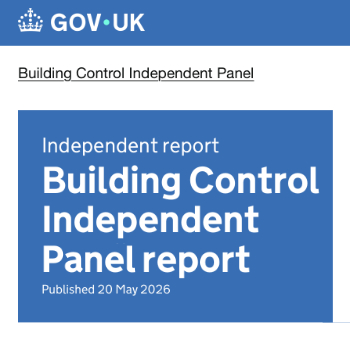
A precis of a key report led by Dame Hackitt with full recommendations and link to the government response.
Building Safety recap April, 2026
A short and longer run-through of the month, with links to further information and sources.

CIAT May 2026 briefing.

From medieval scribes to modern word art.

ECA welcomes crackdown on late payment and push for clean energy, whilst CIOB seek fixed cladding removal timeframes.
Cyber Security in the Built Environment
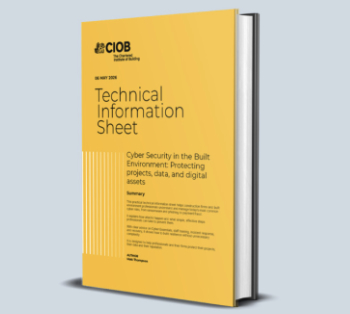
Protecting projects, data, and digital assets: A CIOB Academy TIS.
Managing competence in the built environment
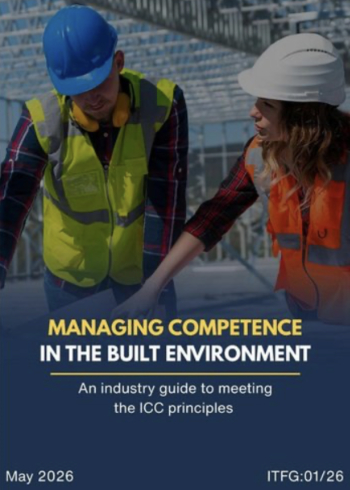
ITFG publishes new industry guide on how to meet the ICC principles.
The UK's campaign to reduce noise pollution: Mythbusting, articles and topic guides.