





Apple wood
Contents |
[edit] Introduction
Apples trees are part of the rose family, as are pears and plums.
Malus x domestica ( also referred to earlier as Malus pumilais or Paradise Apple) is common in the UK but not a native species, where as Malus sylvestris or crab apple is a native species. The very similar Malus sylvestris is also native to the UK, known as wild apple or wild crab apple it is thought to be an important ancestor of other varieties
Apple trees are cultivated in orchards and small trees are often found in hedgerows, scrub, copses, at roadsides and on rough ground, often singularly. Apples are important for wildlife, for example, as a food source for thrushes and bullfinches and a nesting ground for blackbirds. Crab apples are a food source for caterpillars and moths, the flowers are an important source of early pollen and nectar for bees, and blackbirds. Thrushes and crows eat the fruits as well as mice, voles, foxes and badgers.
[edit] Forestry products
Timber from many of the apple tree varieties can be used in buildings. The heartwood varies from a light reddish to a deeper red/brown, with darker and lighter bands of colour with a pale cream sapwood, though this varies with the variety.
It is a hardwood and is used for turnery, handles, carving, small speciality objects as well as furniture. It has a sweet scent and is therefore often used as firewood and for smoking. It can shrink significantly between seasons.
Is not listed in the CITES Appendices or on the IUCN Red List of Threatened Species, although studies have shown that Malus sieversii or wild apple native to mountain areas is increasingly under threat and a species known as Niedzwetsky’s Apple or Malus niedzwetzkyana, also an ancestor of the domestic apple is also at risk.
[edit] Specification
- Common Name(s): Apple, Crab Apple, Wild Apple
- Scientific Name: Malus spp. (Malus domestica, Malus sieversii, Malus sylvestris, etc.)
- Distribution: Found throughout most temperate climates
- Tree Size: 13-30 ft (4-9 m) tall, 1 ft (.3 m) trunk diameter
- Average Dried Weight: 52 lbs/ft3 (830 kg/m3)
- Specific Gravity (Basic, 12% MC): .61, .83
- Janka Hardness: 1,730 lbf (7,700 N)
- Modulus of Rupture: 12,800 lbf/in2 (88.3 MPa)
- Elastic Modulus: 1,270,000 lbf/in2 (8.76 GPa)
[edit] Related articles on Designing Buildings
- A guide to the use of urban timber FB 50.
- Birch wood.
- Carpentry.
- Cedar.
- Forest Stewardship Council.
- Hardwood.
- Lime wood.
- Programme for the Endorsement of Forest Certification
- Softwood.
- Timber vs wood.
- Types of timber.
[edit] External references
Featured articles
Check out some of the best features and news from Designing Buildings as well as key stories from around the web.
Construction Management, 10 June

24 months to 14: CITB launches accelerated apprenticeships.
Bridging the gap between clients and contractors

Concerns remain around contractor quality, capability, and delivery.
Construction Management, 10 June.
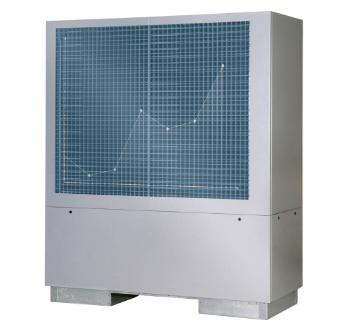
Heat pumps beat boilers in new home tests.
Building Safety Act implementation in Wales

CIAT to host industry panel on 26 June.

New and updated CLC building safety guidance.
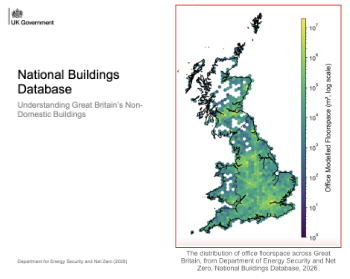
New UK National Buildings Database.
Building Safety Wiki Interviews

Chief executive of the British Woodworking Federation.
Planning condition discharge in England and Wales

A brief explanation from a building compliance expert, with further links.
Overheating guidance and tools for building designers

Guidance for dealing with element of building fabric control that have increasing importance.
Shading for housing, a design guide

From the Good Homes Alliance and British Blind and Shutter Association.
UK Standard Skills Classification (SSC)

A shared framework for describing skills needs.