





Agile construction

[edit] Introduction
In general, the term ‘agile’ means the ability to move swiftly and with ease. In construction, it can be used to describe items of plant that are specified for certain tasks due to being particularly capable of operating quickly and easily.
It can also be used in relation to agile infrastructure, which is infrastructure that is responsive and can adapt to the changing needs of the user.
More specifically though, agile can relate to a method of project management, often known as ‘Agile construction’. This is a process developed from agile manufacturing and project management, particularly that developed by the Toyota Production System, and applied to construction with the intention of dividing tasks and activities into short work phases, allowing productivity to be measured and improved. Agile construction techniques include prefabrication and supply chain management.
Agile construction utilises real-time input from the source of the work information to measure productivity and provide feedback. This allows for changes to be made each time the process is repeated to improve upon it and remove the elements that are inefficient, unproductive or wasteful. This means that a contractor is able to rapidly adapt to changes both on- and off-site, increase accuracy, and ultimately provide better value to the client.
Agile thinking tends to be innovative, responsive and flexible and focusses on delivering value. It is a positive mindset that does not condemn failure but uses it to generate feedback.
[edit] Other definitions
NB Inclusive design in essential services. A practical guide for firms and suppliers, written by Bailey Kursar for the Money Advice Trust and Fair By Design and published in 2021, suggests: ‘The concept of Agile development encompasses an adaptable, collaborative and iterative way of planning, developing and delivering work. It was popularised by the Manifesto for Agile Software Development https://agilemanifesto.org/.
Functional Standards Common Glossary, published by the Cabinet Office, states: ‘Agile is an approach to software development that can also be used in different project management contexts. It emphasises building quickly, testing and iterating work based on regular feedback.’
The Association for Project Management (APM) Agile Glossary defines agile as: ‘…a project management approach based on delivering requirements iteratively and incrementally throughout the life cycle.’
It defines an agile development as: '...an umbrella term specifically for iterative software development methodologies. Popular methods include Scrum, Lean, DSDM (Dynamic System Development Method) and eXtreme Programming (XP).'
[edit] Related articles on Designing Buildings
- Advanced manufacturing.
- Agile manifesto.
- Big data from smart infrastructure.
- Dynamic conditions for project success.
- Increasing productivity in 2018.
- Infrastructure Transformation.
- Lean construction.
- Lean construction - a quality perspective.
- Logistics management.
- Prefabrication.
- Quality Management System.
- Resource management.
- Scaled agile.
- Supply chain management.
- Understanding agile in project management.
Featured articles
Check out some of the best features and news from Designing Buildings as well as key stories from around the web.
Building Safety Act implementation in Wales
CIAT to host industry panel on 26 June.
New and updated CLC building safety guidance.
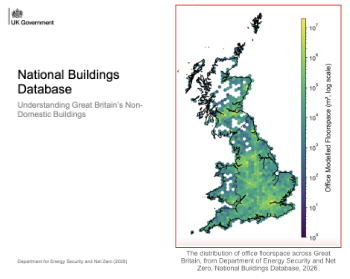
New UK National Buildings Database.
Building Safety Wiki Interviews

Chief executive of the British Woodworking Federation.
Planning condition discharge in England and Wales

A brief explanation from a building compliance expert, with further links.
Overheating guidance and tools for building designers

Guidance for dealing with element of building fabric control that have increasing importance.
Shading for housing, a design guide

From the Good Homes Alliance and British Blind and Shutter Association.
UK Standard Skills Classification (SSC)

A shared framework for describing skills needs.
Social media ban consultation comes to close

CIOB urges UK Government to consider social media’s role in careers guidance in ban debate.
The latest of eight Skills England apprenticeship units

The addition of battery manufacturing welcomed by ECA with a warning about the risks of fast-tracked apprenticeship units.
Building Control Independent Panel final report
A precis of a key report led by Dame Hackitt with full recommendations and link to the government response.