





Advertisement consent

|
For the purposes of planning permission ‘advertisements’ are defined in section 336(1) of the Town and Country Planning Act 1990 (as amended) as:
‘any word, letter, model, sign, placard, board, notice, awning, blind, device or representation, whether illuminated or not, in the nature of, and employed wholly or partly for the purposes of, advertisement, announcement or direction, and (without prejudice to the previous provisions of this definition) includes any hoarding or similar structure used or designed, or adapted for use and anything else principally used, or designed or adapted principally for use, for the display of advertisements.’
The display of advertisements is subject to planning consent as set out in the Town and Country Planning (Control of Advertisements) (England) Regulations 2007.
Advertisements may be:
- Listed in Schedule 1 and permitted without consent from the local planning authority.
- Listed in Schedule 3 and have ‘deemed consent’ from the local planning authority provided that they comply with specific restrictions. NB: Local planning authorities can restrict deemed consent in a particular area through Regulation 7 directions.
- Not listed in Schedule 1 or 3, or listed in Schedule 3 but not complying with the restrictions, and so requiring ‘express consent’ from the local planning authority.
All advertisements are subject to conditions in Schedule 2 of the Regulations:
- No advertisement is to be displayed without the permission of the owner of the site on which they are displayed (this includes the highway authority, if the sign is to be placed on highway land).
- No advertisement is to be displayed which would obscure, or hinder the interpretation of official road, rail, waterway or aircraft signs, or otherwise make hazardous the use of these types of transport.
- Any advertisement must be maintained in a condition that does not impair the visual amenity of the site.
- Any advertisement hoarding or structure is to be kept in a condition which does not endanger the public.
- If an advertisement is required to be removed, the site must be left in a condition that does not endanger the public or impair visual amenity.
Depending on the circumstances, additional permissions may be required, such as listed building consent. A-boards on highways and footways where vehicular traffic is prohibited require express consent and the consent of the relevant council under the Highways Act.
If there is uncertainty about whether consent is required or what other consents might be necessary, the local planning authority should be consulted.
[edit] Related articles on Designing Buildings Wiki.
- Deemed consent.
- Express consent.
- Letting boards regulation 7 direction.
- Listed buildings.
- Planning permission.
- Statutory approvals.
[edit] External references
Featured articles and news

We're expanding our collaborative mission by launching DB Intelligence, an exclusive market research advisory panel. Built environment professionals can now get paid to share their expertise on industry trends, products and services.
Panel members receive direct financial incentives for participating in research projects like short surveys, 1-2-1 interviews and focus groups. Register today to shape the future of the construction sector.
Planning condition discharge in England and Wales

A brief exoplanation from a building compliance expert, with further links.
Overheating guidance and tools for building designers

Guidance for dealing with element of building fabric control that have increasing importance.
Shading for housing, a design guide

From the Good Homes Alliance and British Blind and Shutter Association.
UK Standard Skills Classification (SSC)

A shared framework for describing skills needs.
Social media ban consultation comes to close

CIOB urges UK Government to consider social media’s role in careers guidance in ban debate.
The latest of eight Skills England apprenticeship units

The addition of battery manufacturing welcomed by ECA with a warning about the risks of fast-tracked apprenticeship units.
Building Control Independent Panel final report
A precis of a key report led by Dame Hackitt with full recommendations and link to the government response.
Building Safety recap April, 2026
A short and longer run-through of the month, with links to further information and sources.
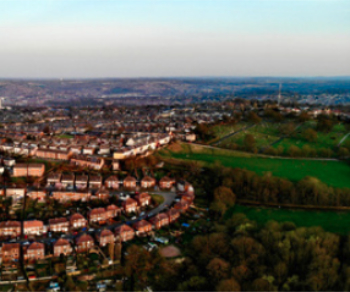
CIAT May 2026 briefing.

From medieval scribes to modern word art.

ECA welcomes crackdown on late payment and push for clean energy, whilst CIOB seek fixed cladding removal timeframes.
Cyber Security in the Built Environment

Protecting projects, data, and digital assets: A CIOB Academy TIS.
Managing competence in the built environment

ITFG publishes new industry guide on how to meet the ICC principles.

The UK's campaign to reduce noise pollution: Mythbusting, articles and topic guides.