





A Home to Remember
|
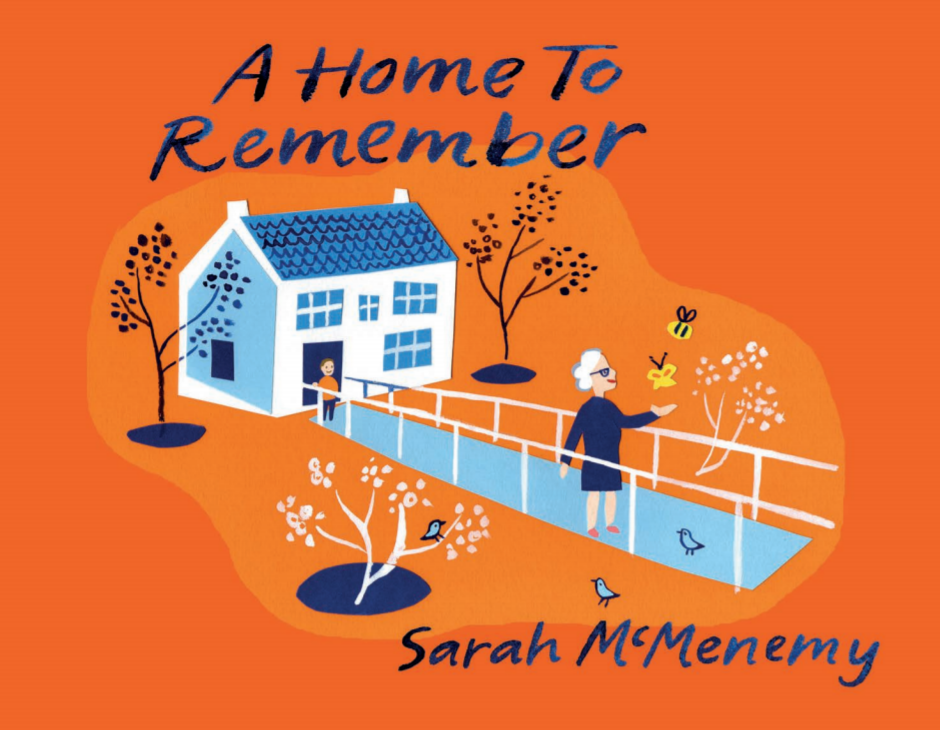
| In May 2019, BRE published a children’s book explaining the effects of dementia to young relatives of those with the condition. The book, which has been illustrated by Sarah McMenemy, explores how dementia can affect elderly relatives from the perspective of a young child. |
Coinciding with Dementia Action Week (20 – 26th May), A Home to Remember follows the story of a young boy and his grandmother, and the adaptations the family is making to her property. The book highlights the importance of increased natural lighting, walking support to encourage activity and creating good lines of sight around the property to assist in navigation. It is based on a dementia-friendly home called ‘Chris and Sally’s House’, which was opened in 2018 by BRE at its Innovation Park in Watford.
‘Chris and Sally’s House’ is aimed at helping educate housebuilders, carers, healthcare professionals and relatives about how to support those living with dementia. It is intended to help people with dementia remain at home for longer, improve quality of life and reduce the cost of care.
Dementia care costs families around £18 billion a year and affects about 850,000 people in the UK. This figure is expected to rise to more than one million by 2025, and two million by 2051. Two-thirds of the cost of dementia is paid by those who suffer from the condition and their families. This is in contrast to other conditions, such as heart disease and cancer, for which the NHS provides care.
The house has been developed around the needs of two specific personas (or avatars), Chris and Sally. The design narrative describes how the features of the building have been adapted to support Chris and Sally as they remain in their home. It is supported by short films created by Loughborough University, explaining how dementia affects Chris and Sally on a good, average and bad day, with actors re-creating the different stages of dementia.
The house includes:
- Clear lines of sight and colour-coded paths that help guide people towards each room.
- Increased natural lighting to help people stay alert during the day and to sleep better at night.
- Automatically controlled natural ventilation to provide good indoor air quality.
- Noise reduction features, to reduce stress.
- Simple switches and heating controls.
- Safety sensors in high risk areas such as the kitchen.
- Homely, simple and familiar interior design to help promote rest and relaxation.
Director of BRE Innovation Parks, Dr. David Kelly said: “We hope that this book will be a helpful resource to schools and families who often struggle to explain the impact of dementia to young children, and in particular how that might affect their ageing relatives. Chris and Sally’s House is open year-round to members of the public who would like to further explore the adaptations which can be found in the book.”
The book will be sent to schools local to BRE and is also available to read online at: https://files.bregroup.com/downloads/A-Home-To-Remember_Chris-and-Sally's-House.pdf
[edit] Related articles on Designing Buildings Wiki
- An ageing population - Challenges for the built environment.
- BRE articles on Designing Buildings Wiki.
- Building Research Establishment.
- Changing lifestyles.
- Daylight benefits in healthcare buildings.
- Dementia and the built environment.
- Dementia-friendly home.
- Homes and ageing in England.
- Inclusive design.
- Lifetime Homes Design Guide (EP 100).
- Lifetime homes.
- New Dwelling House at Grange View.
- Older people.
- People with disabilities.
- The design of extra care housing for older people and its impact on wellbeing: The East Sussex perspective.
Featured articles
Check out some of the best features and news from Designing Buildings as well as key stories from around the web.

Government approach could undermine delivery and regeneration.
World's first mass timber data centre.

The overlooked environmental aspect of data centre development.
Introduction to radon awareness

New technical information sheet published by CIOB.

Updated supplier guide can help electrical contractors engage with NHP.

CIAT confirm the winners of the 2026 architectural technology awards.

Government launches a one stop shop for flood preparedness.

Sir Edwin Lutyens: Britain's greatest architect? Book review.

CIOB publishes free template to help assess and manage risks.
ECA's reflections on Party Conference season

Burnham wants to be confident of winning before asking for a fresh mandate.
New Chief Construction and Scientific Adviser

Sergio Cavalaro, Professor of Infrastructure Systems at Loughborough University.
Building safety levy for England

CIAT publish estimator tool for members.

Water sector faces a growing crisis that could slow the delivery of vital infrastructure.