





Vicarious liability
Vicarious liability is a situation in which one party is held responsible for the tort of another party (the tortfeasor).
Typically, vicarious liability arises where an employer is held liable for the actions or omissions of its officers or employees performing duties in the course of their employment. This liability is not dependent on the employer having done anything wrong themselves.
Very broadly, the tests for vicarious liability are:
- Whether the employer was in control of the other party.
- Whether the act or omission was closely connected with their duties.
This does not restrict vicarious liability to ‘authorised’ actions or omissions. Vicarious liability can exist if authorised actions have been carried out carelessly or wrongfully, although there becomes a point where the action is carried out in such a way that it is outside the course of their employment and they may be considered to be acting independently, in a personal capacity.
In construction, vicarious liability may arise where the employees of a contractor act in such a way in the course of performing their duties so as to cause harm to another employee, the worker of another contractor or a member of the public.
Vicarious liability may also arise where a ‘superior’ is deemed to be in control of a party even where they are not their employer, for example:
- An employer might be held liable for the actions of clients or customers if they are under their control.
- A contractor ‘lending’ an employee to a subcontractor may still retain effective control over them.
- A subcontractor that is ‘integrated’ into a contractor organisation so that they are behaving as if they are an employee.
However, the interpretation of ‘control’ is likely to be applied narrowly in such circumstances. Control is not demonstrated by ‘supervision’, and might be difficult to establish if a subcontractor is skilled.
Employers can minimise their risk by adopting measures to ensure that those under their control perform their duties in a reasonable manner and are adequately trained.
[edit] Related articles on Designing Buildings Wiki
- Appointing consultants.
- CDM.
- Contract v tort.
- Construction contract.
- Contractor.
- Damages.
- Health and safety.
- Subcontractor.
[edit] External reference
Featured articles and news

We're expanding our collaborative mission by launching DB Intelligence, an exclusive market research advisory panel. Built environment professionals can now get paid to share their expertise on industry trends, products and services.
Panel members receive direct financial incentives for participating in research projects like short surveys, 1-2-1 interviews and focus groups. Register today to shape the future of the construction sector.
Building Control Independent Panel final report
A precis of a key report led by Dame Hackitt with full recommendations and link to the government response.
Guide to ISO 19650 for Architecture Firms (2026)
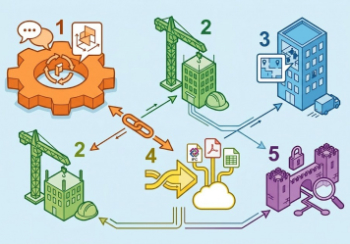
A user gives their low down.

A UK training and membership provider for mould remediation professionals.
Building Safety recap April, 2026
A short and longer run-through of the month, with links to further information and sources.

CIAT May 2026 briefing.
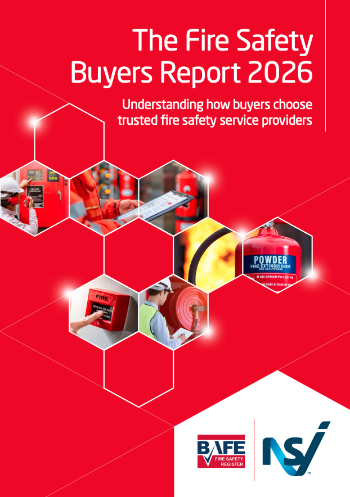
Independent NSI and BAFE study exploring how organisations are changing the way they buy fire safety services.

From medieval scribes to modern word art.

ECA welcomes crackdown on late payment and push for clean energy, whilst CIOB seek fixed cladding removal timeframes.
Cyber Security in the Built Environment
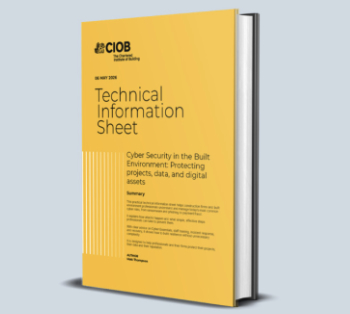
Protecting projects, data, and digital assets: A CIOB Academy TIS.
Managing competence in the built environment
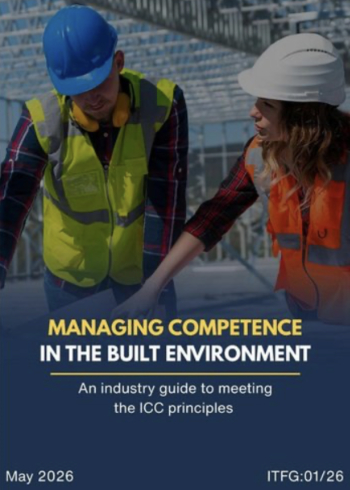
ITFG publishes new industry guide on how to meet the ICC principles.
The UK's campaign to reduce noise pollution: Mythbusting, articles and topic guides.