





Value planning in building design and construction
Value Management (VM) and Value Engineering (VE) are techniques concerned with defining, maximising and achieving 'value for money' (VfM). These are systematic team-based collaborative approaches, initially pioneered in the United States during the Second World War to secure maximum output from limited resources.
VM covers the full range of value techniques that are available and used throughout the duration of a project as part of a continual process. By contrast, Value Planning (VP) refers to value techniques that are applied during the planning phases of a project, or at the early stage of design and development.
VP activities are introduced in the early phases with the intention of defining, clarifying and agreeing a hierarchy of the client’s objectives. This hierarchy identifies the issues and functions that are of particular importance to the client. In general terms, VP is used, first by the client’s team to develop the strategic brief, and later by the extended team to develop the strategic brief into the project brief.
The client’s team undertake the first VP exercise to identify critical stakeholder values in a quantitative way, and prioritise the delivery of those values. This involves identifying business requirements and carrying out options studies and/or analysis. This helps to inform the 'mission statement' and strategic brief.
A VP workshop can then be held with the aim of:
- Developing the strategic brief into the project brief.
- Defining user requirements.
- Identifying project sensitivities and expectations.
- Identifying enhancement opportunities.
For the VP activities to be a success, as with VE, it is important to involve the most appropriate people at the value meetings and workshops. While this will vary according to the project, it is expected that there should be comprehensive representation of all relevant stakeholders in a particular phase of the process. This includes the client and the end users if possible, so they can inform the function analysis and requirement specification.
As VE proceeds, the supply chain and other stakeholders should become involved.
[edit] Related articles on Designing Buildings Wiki
Featured articles and news
We're expanding our collaborative mission by launching DB Intelligence, an exclusive market research advisory panel. Built environment professionals can now get paid to share their expertise on industry trends, products and services.
Panel members receive direct financial incentives for participating in research projects like short surveys, 1-2-1 interviews and focus groups. Register today to shape the future of the construction sector.
Building Control Independent Panel final report
A precis of a key report led by Dame Hackitt with full recommendations and link to the government response.
Guide to ISO 19650 for Architecture Firms (2026)
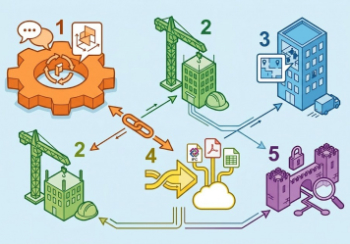
A user gives their low down.

A UK training and membership provider for mould remediation professionals.
Building Safety recap April, 2026
A short and longer run-through of the month, with links to further information and sources.

CIAT May 2026 briefing.
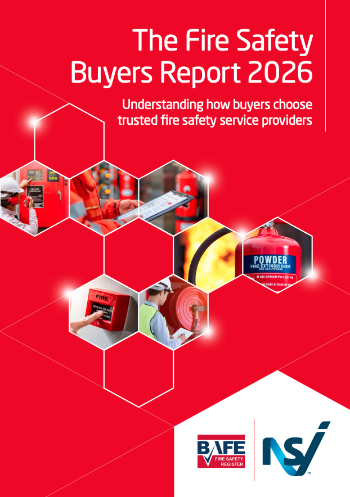
Independent NSI and BAFE study exploring how organisations are changing the way they buy fire safety services.
From medieval scribes to modern word art.

ECA welcomes crackdown on late payment and push for clean energy, whilst CIOB seek fixed cladding removal timeframes.
Cyber Security in the Built Environment
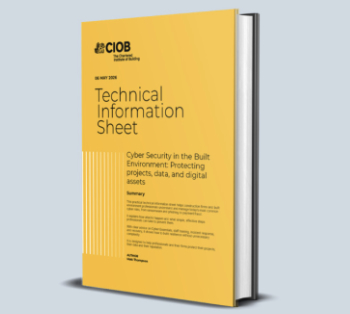
Protecting projects, data, and digital assets: A CIOB Academy TIS.
Managing competence in the built environment
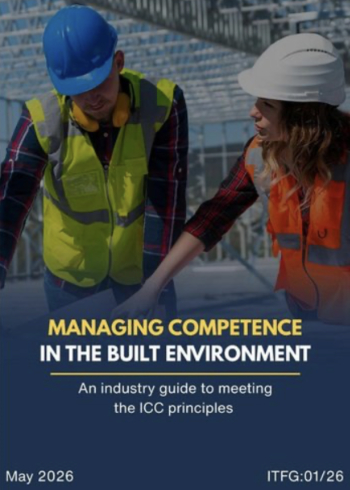
ITFG publishes new industry guide on how to meet the ICC principles.
The UK's campaign to reduce noise pollution: Mythbusting, articles and topic guides.