





Thermal resistance
The thermal resistance of a material is a measure of how resistant it is to the transfer of heat across it. The thermal resistance of a material is measured by its R-value. The higher the R-value of a material, the more effective it is as an insulator.
For more information, see R-value.
Thermal resistance is the temperature difference between two defined material surfaces that induces a unit heat flow rate through a unit area. It is often described as the reciprocal of thermal transmittance, and can be derived from the thermal conductivity and the thickness of the materials.
R-values can be calculated by dividing the thickness of a material (in metres) by its thermal conductivity (k-value or lambda value (λ) in W/mK). R-values are therefore expressed in m2K/W (or ft2·°F·hr/Btu in the USA). The overall R-value of a multi-layered element can be calculated by adding the R-values of its component materials.
R-values are not directly relatable to U-values however, as unlike U-values, R-values do not include surface heat transfers at the boundary of the element by convection and radiation, they are only a measure of the thermal resistance of the materials themselves.
[edit] Related articles on Designing Buildings Wiki
Featured articles
Check out some of the best features and news from Designing Buildings as well as key stories from around the web.

Your views needed - a strategy for the professions, trades and occupations.

Confronting competency, codes, capacity and costs.

The hidden risk in modern construction supply chains.
Construction Management, 10 June

24 months to 14: CITB launches accelerated apprenticeships.
Bridging the gap between clients and contractors

Concerns remain around contractor quality, capability, and delivery.
Construction Management, 10 June.
Heat pumps beat boilers in new home tests.
Building Safety Act implementation in Wales

CIAT to host industry panel on 26 June.

New and updated CLC building safety guidance.
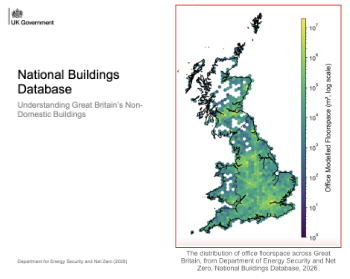
New UK National Buildings Database.
Building Safety Wiki Interviews

Chief executive of the British Woodworking Federation.
Planning condition discharge in England and Wales

A brief explanation from a building compliance expert, with further links.