





SuDS consultation
On 18 December 2014, the government published their response to the consultation on sustainable urban drainage systems (SuDS).
This made clear that from April 6 2015, planning authorities will be given authority for approving SuDS, and not SuDS Approval Bodies (SABs) as had previously been suggested.
Local planning policies and decisions on planning applications will be expected to ensure that sustainable drainage systems for the management of run-off are put in place, unless they can be demonstrated to be inappropriate. However, a threshold of 10 dwellings or more; or equivalent non-residential or mixed development (as set out in Article 2(1) of the Town and Country Planning (Development Management Procedure) (England) Order 2010) will apply. This has been criticised for leaving nine out of 10 developments at risk of flooding.
The requirement set out in the National Planning Policy Framework (NPPF) that all new developments in areas at risk of flooding should give priority to the use of sustainable drainage systems will continue to apply.
Local planning authorities must consult the relevant lead local flood authority when considering proposals, and can use planning conditions or planning obligations to ensure there are clear arrangements in place for ongoing maintenance.
The Department for Communities and Local Government has also consulted on a proposal to make lead local flood authorities a statutory consultee on planning applications for surface water management, and to make changes to the statutory consultee role of the Environment Agency. See Planning application process: statutory consultee arrangements. This consultation closed on 29 January 2015.
[edit] Related articles on Designing Buildings Wiki
- Catchment flood management plans.
- Flood and Water Management Act.
- Pitt Review.
- Rainwater harvesting.
- Sustainable urban drainage systems SUDS.
- The SUDS manual.
- Water consumption.
- Water engineering.
[edit] External references
- WWT Communities left with flood risk after nine out of 10 developments exempted from SuDS.
- Gov.uk Consultation outcome. Sustainable Drainage Systems: changes to the planning system.
- The Community Secretary’s Written Statement to Parliament.
Featured articles
Check out some of the best features and news from Designing Buildings as well as key stories from around the web.
Bridging the gap between clients and contractors

Concerns remain around contractor quality, capability, and delivery.
Construction Management, 10 June.
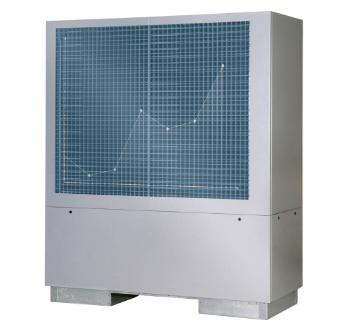
Heat pumps beat boilers in new home tests.
Building Safety Act implementation in Wales
CIAT to host industry panel on 26 June.
New and updated CLC building safety guidance.
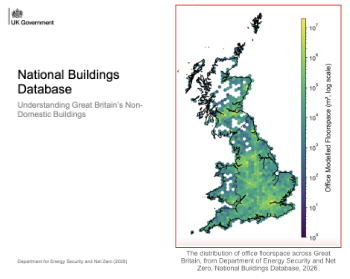
New UK National Buildings Database.
Building Safety Wiki Interviews
Chief executive of the British Woodworking Federation.
Planning condition discharge in England and Wales

A brief explanation from a building compliance expert, with further links.
Overheating guidance and tools for building designers

Guidance for dealing with element of building fabric control that have increasing importance.
Shading for housing, a design guide

From the Good Homes Alliance and British Blind and Shutter Association.
UK Standard Skills Classification (SSC)

A shared framework for describing skills needs.
Social media ban consultation comes to close

CIOB urges UK Government to consider social media’s role in careers guidance in ban debate.