





Strategic environmental assessment
The National Planning Policy Framework (NPPF) defines a strategic environmental assessment (SEA) as: 'A procedure (set out in the Environmental Assessment of Plans and Programmes Regulations 2004) which requires the formal environmental assessment of certain plans and programmes which are likely to have significant effects on the environment.'
The London Plan, published by the Mayor of London in March 2016, suggests that Strategic Environmental Assessment is: ‘Required under the European Directive 2001/42/EC, which has been transposed into UK Law through the Environmental Assessment of Plans and Programmes Regulations 2004. Strategic Environmental Assessment seeks to contribute to the integration of environmental considerations into the preparation and adoption of plans to promote sustainable development.’
A handbook on environmental impact assessment, 4th edition, published by Scottish Natural Heritage in 2013 suggests that the terms Strategic Environmental Appraisal, or Strategic Environmental Assessment (SEA) refer to: ‘…the whole process of considering the environmental effects of certain public plans and programmes, including development plans, under the Environmental Assessment (Scotland) Act 2005.’
The National Flood and Coastal Erosion Risk Management Strategy for England, Glossary, published by the Environment Agency in 2020, states: ‘Strategic environment assessment (SEA) is undertaken to ensure that the environment is considered during the development of a plan or strategy. It helps to ensure environmental issues are fully integrated into the plan making process alongside technical, economic and other factors. In doing so it can contribute to the promotion of sustainable development and environmental protection.’
See also: Strategic environmental assessment directive.
[edit] Related articles on Designing Buildings
Featured articles
Check out some of the best features and news from Designing Buildings as well as key stories from around the web.
Construction Management, 10 June

24 months to 14: CITB launches accelerated apprenticeships.
Bridging the gap between clients and contractors

Concerns remain around contractor quality, capability, and delivery.
Construction Management, 10 June.

Heat pumps beat boilers in new home tests.
Building Safety Act implementation in Wales

CIAT to host industry panel on 26 June.
New and updated CLC building safety guidance.
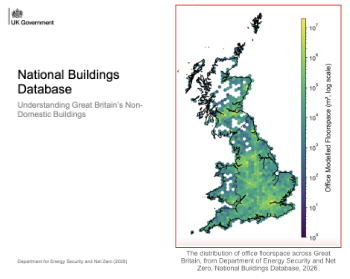
New UK National Buildings Database.
Building Safety Wiki Interviews

Chief executive of the British Woodworking Federation.
Planning condition discharge in England and Wales

A brief explanation from a building compliance expert, with further links.
Overheating guidance and tools for building designers

Guidance for dealing with element of building fabric control that have increasing importance.
Shading for housing, a design guide

From the Good Homes Alliance and British Blind and Shutter Association.
UK Standard Skills Classification (SSC)

A shared framework for describing skills needs.