





Private Registered Provider
The Charter for Social Housing Residents, Social Housing White Paper, published by the Ministry of Housing, Communities and Local Government (MHCLG) in November 2020, defines a Private Registered Provider as: ‘a registered provider of social housing that is not a local authority. Most are housing associations.’
Housing statistics and English Housing Survey, glossary, published by the Department for Levelling Up, Housing and Communities in 2019, defines private registered providers (PRPs) as: ‘…independent societies, bodies of trustees or companies in England established for the purpose of providing low-cost social housing for people in housing need on a non-profit-making basis. Any trading surplus is used to maintain existing homes and to help finance new ones. They are major providers of new social homes for rent, while many also run shared ownership schemes to help people who cannot afford to buy their own homes outright. In England, housing associations are funded and regulated by Homes England. The Regulator of Social Housing maintains a list of social housing providers registered with it including the latest registrations and deregistrations. Private registered providers were previously termed Registered Social Landlords or housing associations. The term excludes local authorities, who also provide social housing, and local authority registered providers.’
[edit] Related articles on Designing Buildings
Featured articles
Check out some of the best features and news from Designing Buildings as well as key stories from around the web.

Households living near new pylons to save on bills.

ECA warns growth must not outpace grid capacity or skills.
The role of the client and decision making

CIOB response to built environment professions call for evidence.
Construction's sustainability reporting revolution

Tracking upfront embodied carbon with digital tools.
ECA welcomes procurement reforms

Public spending must back British jobs and skills.
Campaigning for Edinburgh: the Cockburn Association 1875-2049

The role of the civic voice in protecting character. Book review.

CIOB photography competition is open for entries.
ECA Edmundson apprentice of the year award

Finalists announced.
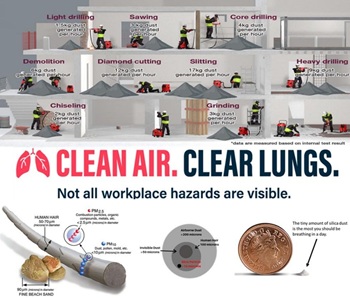
Major new study exposes serious knowledge gaps.

Generating energy from internal light as well as sunshine.

ECA welcomes plans to strengthen subcontractor quality control.

Combining mid-career qualifications with experience broadens career opportunities.
Comments
[edit] To make a comment about this article, or to suggest changes, click 'Add a comment' above. Separate your comments from any existing comments by inserting a horizontal line.