





Peppercorn rent
The term ‘leasehold’ in property law describes a lease from the freeholder of a property that enables the leaseholder to use the property for a specified period subject to conditions set out in the lease in return for the payment of rent. At the end of the lease the premises revert to the freeholder.
Generally, in order for a lease to be enforceable, a ground rent (valuable consideration) is paid by the leaseholder to the landlord. However, historically, as the amounts payable were typically very small, some freeholders asked for peppercorns rather than money, with a phrase in the lease such as, ‘...a yearly rent of one peppercorn, if demanded’, effectively meaning that there was nothing to collect.
This has given rise to the term ‘peppercorn lease’. The phrase is now also used more generally to mean an amount that is small or insignificant, for example a ‘peppercorn payment’ for the sale of something that has little monetary value.
Ground rent is still charged by landlords, and is a condition of most leases. Ground rent is usually a small amount, typically £50 to £300 a year. If the amount is very small, or notional, it may be described as a peppercorn rent.
If a leaseholder extends a lease under the Leasehold Reform, Housing and Urban Development Act 1993 they then only have to pay a ‘peppercorn rent’, effectively a ground rent of nothing. If a lease is extended by negotiation however, ground rent may still be payable.
[edit] Related articles on Designing Buildings Wiki
Featured articles
Check out some of the best features and news from Designing Buildings as well as key stories from around the web.

New and updated CLC building safety guidance.
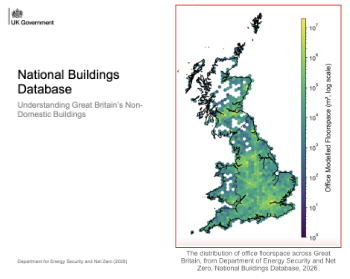
New UK National Buildings Database.
Building Safety Wiki Interviews

Chief executive of the British Woodworking Federation.
Planning condition discharge in England and Wales

A brief explanation from a building compliance expert, with further links.
Overheating guidance and tools for building designers

Guidance for dealing with element of building fabric control that have increasing importance.
Shading for housing, a design guide

From the Good Homes Alliance and British Blind and Shutter Association.
UK Standard Skills Classification (SSC)

A shared framework for describing skills needs.
Social media ban consultation comes to close

CIOB urges UK Government to consider social media’s role in careers guidance in ban debate.
The latest of eight Skills England apprenticeship units

The addition of battery manufacturing welcomed by ECA with a warning about the risks of fast-tracked apprenticeship units.
Building Control Independent Panel final report

A precis of a key report led by Dame Hackitt with full recommendations and link to the government response.
Building Safety recap April, 2026

A short and longer run-through of the month, with links to further information and sources.