




Illuminating Stained Glass: creativity, conservation and craft at Barley Studio

Illuminating Stained Glass: creativity, conservation and craft at Barley Studio, Juliette MacDonald, Helen Whittaker and Keith Barley, Lund Humphries, 2025, 96 pages, 79 colour illustrations.
The conservation of historic stained glass has increasingly assumed a greater proportion of the work of British stained-glass studios over the last 30 years. With fewer commissions for traditional architectural stained glass, artists in the medium have increasingly channelled their skills into the repair of damaged windows and the protection of stained glass from deterioration. In the context of the limited funds to pay for this necessary work and few new commissions, Heritage Crafts recently added historic stained glass to the red list of endangered crafts.
Given these concerns, the colourful and arresting new stained glass made by Barley Studio in Illuminating Stained Glass is an impressive reminder that exciting new work in the medium continues to be made, and books on contemporary stained-glass practice are very rare. Barley Studios, one of several larger stained-glass studios in Britain, was founded in York by Keith Barley in 1973.
The book opens with his conservation of outstanding collections of medieval stained glass in the final decades of the last century. At Ashton-under- Lyne, Barley was a pioneer of environmental protective glazing in the 1970s, a technique that has become the foremost method for retaining important historic window glass in situ. Conservation at Fairford took place over two decades. His work there and at Stanford-on-Avon set the standards for well-documented, reversible intervention, effecting transformational restoration of medieval stained glass with the careful addition of sensitive and scholarly replacement faces where necessary.
New windows featured in the book include the west window of Southwell Minster, a collaboration with Patrick Reyntiens in 1996. Soon after, the artist Helen Whittaker joined the studio. From this point, at the end of chapter one, the book unexpectedly metamorphoses into one entirely based around her diverse creative work. This includes abstract geometric designs at Beverley Minster (2004) and Ely Cathedral (2010), and the inclusion of figurative elements in abstract compositions.
The expressionist depiction of St Ethelburga at her church in Bishopsgate, London (2002), contrasts sharply with the graphic pop-art style of a window celebrating women in the RAF at the Royal Air Force Club in Piccadilly (2018). Whittaker came closer still to pop art in the collaboration with David Hockney and the creation of his window for Westminster Abbey in the same year.
It is difficult to write an easy narrative for work so restlessly and innovatively diverse, as designs, imagery and techniques in each window were specifically chosen to respond to different kinds of buildings and clients. The short descriptions of Helen Whittaker’s varied commissions read rather like a catalogue and leave us with no clear focus, philosophy or revealing insights into the work of the studio – apart from the ever-present connections and conscious departures from traditional stained glass common to all artists working with stained glass.
The importance of collaboration is frequently cited, but apart from the names of the artists who provided the lettering for certain windows, we learn nothing of the glass painters, glaziers and technicians who must have been involved in the creation of the windows. The many large and mostly good illustrations nonetheless make a case for Barley Studios’ impressive ability to work in widely contrasting styles for different commissions.
This article originally appeared as ‘Silent collaboration’ in the Institute of Historic Building Conservation’s (IHBC’s) Context 184, published in September 2025. It was written by Martin Crampin, an artist, designer and photographer who has published widely on stained glass, particularly in Wales, based at the University of Wales Centre for Advanced Welsh and Celtic Studies, Aberystwyth.
--Institute of Historic Building Conservation
Related articles on Designing Buildings Conservation.
- Conservation area.
- Conservation.
- Conserving Canterbury Cathedral's Great South Window.
- Decorative glass.
- Glass.
- Glazing.
- Heritage.
- Historic environment.
- IHBC articles.
- IHBC.
- Lead glass.
- Ordinary people in stained glass.
- Rose window.
- Stained glass window guidance.
- Stained glass.
- The history of glass.
IHBC NewsBlog
IHBC sponsors Gardens Trust event 23-4 Sept 2026
.jpeg)
'Learning from the Past, Shaping the Future’ takes place in Milton Keynes
Renovations to Frank Lloyd Wright's Fallingwater complete
.jpg)
World Heritage Preserved project opens house for tours again
Shakespeare Birthplace Trust places Hall's Croft on HAR Register
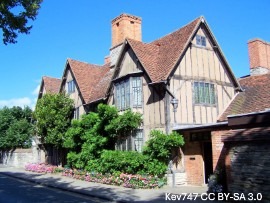
Stratford-upon-Avon home of Shakespeare's daughter is 'At Risk'
Lady Grange’s House repaired on St Kilda
.jpg)
National Trust for Scotland repairs stone cleit with link to famous island resident
Griff Rhys Jones on BBC Radio 4 Today programme
,_Green_Lane,_Derby.jpg)
The Victorian Society’s President unveiled its latest Top Ten Endangered Buildings 2026.
Need a MATE? Book your place now.

IHBC offers free webinars on applying for IHBC accreditation (Full & Associate).
UK Stained Glass Repository finds windows new homes
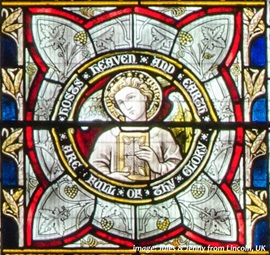
How are stained glass windows are rescued, stored and repurposed?
APPGEBE report sets high aims for quality
'Government must not sacrifice quality in drive to build 1.5m homes'
New measures protect Historic Shipwrecks from heritage crime

Underwater cultural heritage benefits from new HE guidance
How could the City of London skyline look in 6 years' time?

Visualisation shows approved planning applications as completed buildings
National Trust for Scotland calls for VAT cuts

Heritage neglect is encouraged by current policies
IHBC's 'Context' Issue 186 features Industrial Heritage
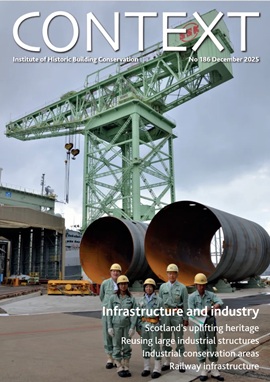
IHBC's members' journal reports on the challenges of conserving infrastructure
Book now for IHBC Annual School 2026
IHBC Annual School is taking place 18-20 June 2026 in Newcastle
RICHeS Research Infrastructure offers ‘Full Access Fund Call’
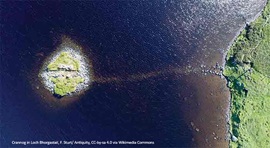
RICHeS offers a ‘Help’ webinar on 11 March
Latest IHBC Issue of Context features Roofing
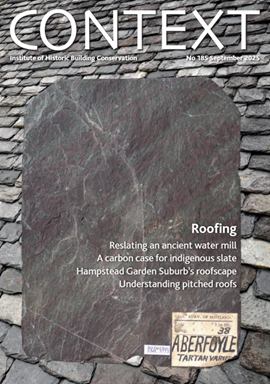
Articles range from slate to pitched roofs, and carbon impact to solar generation to roofscapes
Three reasons not to demolish Edinburgh’s Argyle House

Should 'Edinburgh's ugliest building' be saved?
IHBC’s 2025 Parliamentary Briefing...from Crafts in Crisis to Rubbish Retrofit
IHBC launches research-led ‘5 Commitments to Help Heritage Skills in Conservation’
How RDSAP 10.2 impacts EPC assessments in traditional buildings

Energy performance certificates (EPCs) tell us how energy efficient our buildings are, but the way these certificates are generated has changed.