






Icynene spray foam insulation
Traditional stone buildings make up a large proportion of the UK’s building stock, and so it is important to focus on improving the energy efficiency of these buildings. The challenge is to make improvements that do not alter the external appearance or compromise valuable period features.
Icynene spray foam insulation was identified as the most suitable product for the traditional market. Its unique open cell and vapour permeable nature ensures no build-up of moisture. An added benefit is that this smart, environmentally responsible alternative to standard chemically-based products is water-blown and contains no HFCs or CFCs.
The initial trial involved one room of a large house. Skirting boards were removed intact to ensure the void between the lath and plaster linings and the solid stone masonry wall was clear of debris. Subsequently, 10mm pipes were inserted into the void from the attic space above and the insulation was injected down the pipes to fill the void. The delivery of the insulation was measured and distributed evenly over the area of the wall. Careful attention was paid to ensuring that no pressure was exerted on the lath and plaster lining to avoid causing any damage.
Separate research which involved monitoring and simulating alternative solutions further improved the process, after which, insulation was successfully installed throughout the entire property.
Acknowledgement to all academics and industrial partners: Mr and Mrs Gibbon-Wood – the owners of the building, Dr M. Abdel-Wahab, Dr A. Owen, Dr N. Turner, C. Levi, D. Chouman, D. Herrera, J. Hood, S. Faulkner-Lee, G. Sheridan, and R. Gilmore.
This innovation was winner of the Highly Commended award, Innovation Achiever's Award, in the 2014 CIOB International Innovation & Research Award.
The judges said, "The innovation shows a non-intrusive method of improving insulation in historic buildings where interior walls are in a delicate condition. The judging panel was attracted to the idea of applying an existing insulation material by means of a new method of application. The innovation is made all the more convincing as a result of the thought given to the skills development required for replicating this method across the sector.”
--CIOB
Featured articles and news
Costs and insolvencies mount for SMEs, despite growth

Construction sector under insolvency and wage bill pressure in part linked to National Insurance, says report.
The place for vitrified clay pipes in modern infrastructure
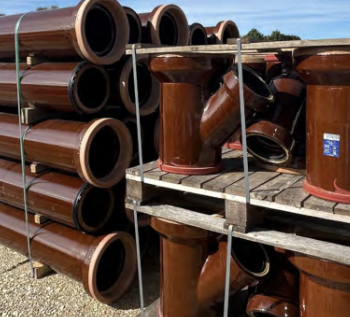
Why vitrified clay pipes are reclaiming their role in built projects.

Research by construction PR consultancy LMC published.
Roles and responsibilities of domestic clients

ACA Safety in Construction guide for domestic clients.
Fire door compliance in UK commercial buildings

Architect and manufacturer gives their low down.
Plumbing and heating for sustainability in new properties

Technical Engineer runs through changes in regulations, innovations in materials, and product systems.
Awareness of the Carbon Border Adjustment Mechanism
What CBAM is and what to do about it.
The new towns and strategic environmental assessments

12 locations of the New Towns Taskforce reduced to 7 within the new towns draft programme and open consultation.

Buildings that changed the future of architecture. Book review.
The Sustainability Pathfinder© Handbook
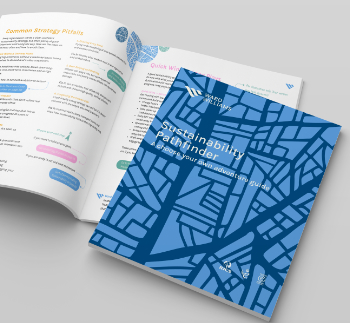
Built environment agency launches free Pathfinder© tool to help businesses progress sustainability strategies.

Government outcome to the late payment consultation, ECA reacts.
IHBC 2025 Gus Astley Student Award winners
Work on the role of hewing in UK historic conservation a win for Jack Parker of Oxford Brookes University.
Future Homes Building Standards and plug-in solar
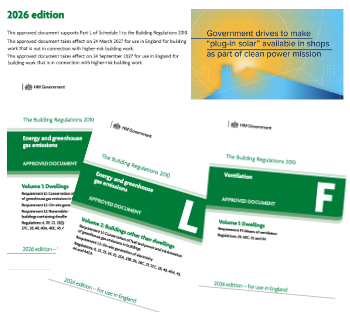
Parts F and L amendments, the availability of solar panels and industry responses.
How later living housing can help solve the housing crisis

Unlocking homes, unlocking lives.
Preparing safety case reports for HRBs under the BSA
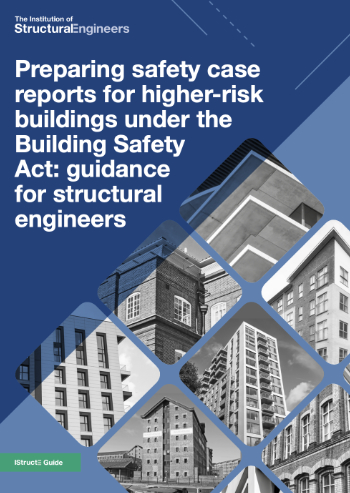
A new practical guide to preparing structural inputs for safety cases and safety case reports published by IStructE.
Male construction workers and prostate cancer

CIOB and Prostate Cancer UK encourage awareness of prostate cancer risks, and what to do about it.